How to Style a Fireplace for Every Season
Create a fireplace display that changes with the seasons without replacing everything around it. This practical guide covers proportion, colour, materials and safe styling for a calm, considered mantel.
Our guides prioritise practical, original advice. Product links may be affiliate links, but they should only appear when they add something useful.
A fireplace can become the visual anchor of a room, but it does not need a completely new arrangement every few months. The most adaptable approach is to keep the main structure restrained, then introduce seasonal changes through natural materials, colour, texture and a small number of well-chosen objects.
Whether you have a traditional mantel, a modern media wall or a simple shelf above a stove, the same principles apply: work with the proportions of the space, leave room for the architecture to breathe and make safety the first consideration. A flexible display will feel more settled than one filled with obvious seasonal symbols.
Start with a calm, adaptable foundation
Before adding seasonal decoration, clear the mantel and assess what the room already provides. The fireplace surround, wall colour, flooring and nearby furniture should all influence the display. A neutral base of one or two vessels, a framed artwork or a simple mirror can remain in place throughout the year.
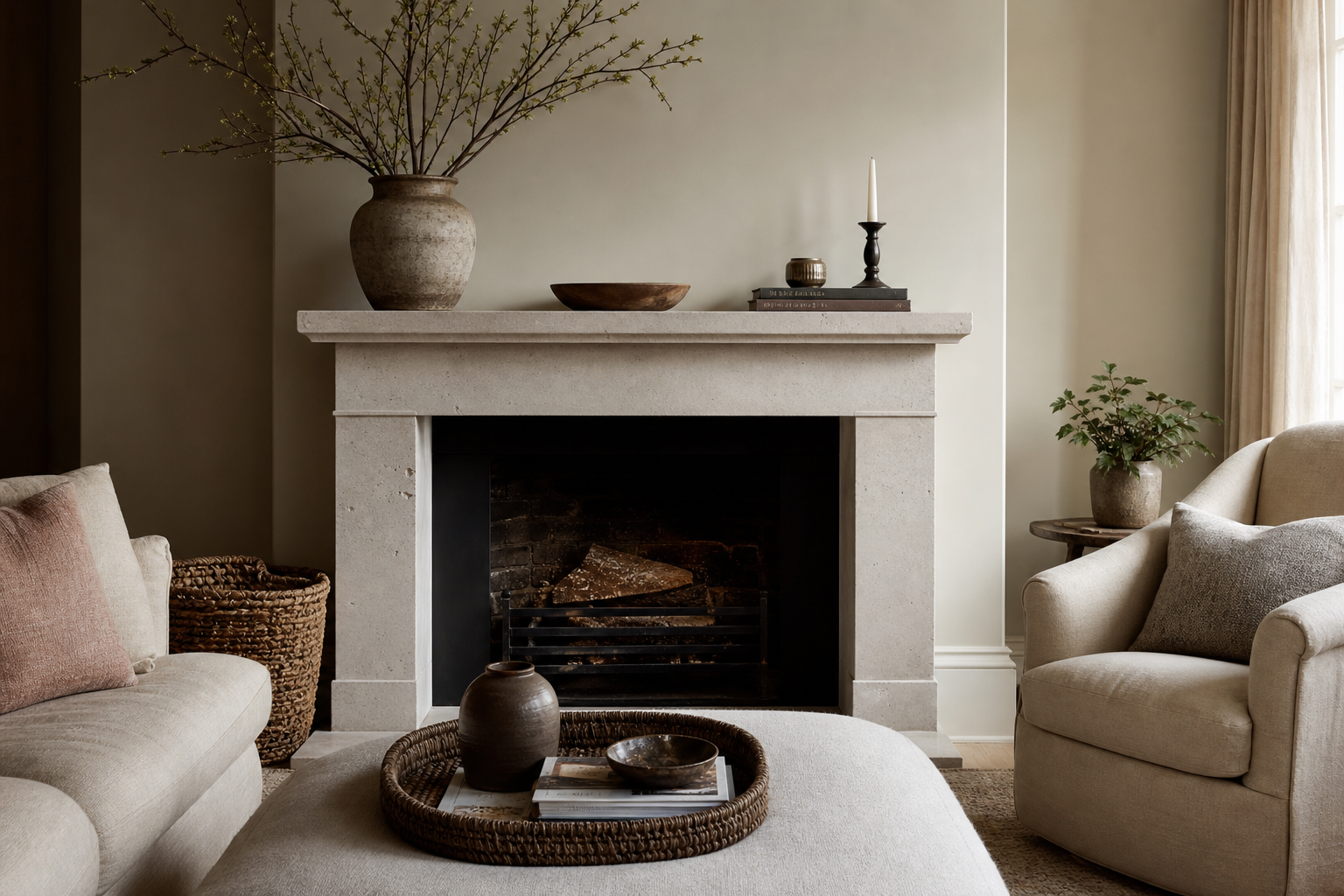
Choose pieces with quiet shapes rather than strongly themed details. A stoneware jug, wooden bowl, glass vase or aged metal candlestick can work in spring, summer, autumn and winter. Varying the finishes keeps the arrangement from looking flat, while a limited colour palette helps each seasonal update sit comfortably with the rest of the room.
If you are starting from scratch, select a large central element first. This might be a mirror, artwork or architectural object. Add two or three smaller pieces around it, keeping enough empty space to prevent the mantel from appearing crowded. Not every item needs to be the same height, but the display should have a clear visual balance.
Use proportion to make the arrangement feel intentional
Scale is often more important than the number of objects. A small collection placed on a wide mantel can look lost, while too many tall pieces can make the wall feel busy. As a useful starting point, let the largest object take up roughly the central portion of the display, then build outwards with lower items.
Layering creates depth without requiring a large collection. Lean artwork against the wall rather than hanging everything, place a shallow bowl in front of a taller vessel, or group a pair of candlesticks at different distances from the edge. Keep the front of the mantel clear enough to see its surface and avoid placing fragile objects where they can be knocked easily.
For an asymmetrical arrangement, balance visual weight rather than matching objects exactly. A tall vase on one side might be balanced by a wider bowl and several lower pieces on the other. For a more formal fireplace, a symmetrical pair of lamps, vessels or candleholders will create a tidier effect.
Refresh the display with seasonal materials
The simplest seasonal change is often a natural one. In spring, use slender branches, fresh greenery or bulbs in a plain pot to bring a lighter quality to the room. Keep the containers simple so the display feels connected to the existing decor rather than like a temporary installation.
Summer suits lighter textures and open space. Try a clear glass vessel, a woven basket placed on the hearth or a bowl filled with decorative objects in pale, natural tones. A small change in fabric can also help: replace a heavy nearby throw with linen or cotton in a relaxed texture.
For autumn, introduce warmth through dried grasses, russet foliage, timber, ceramic and deeper natural shades. A single bundle of dried stems in a substantial vase is usually more effective than several small arrangements. The aim is to suggest the season through texture and colour, not to fill the mantel with literal motifs.
Winter can be made atmospheric with evergreen foliage, wool, wood and soft candlelight. A garland may work well on a broad mantel, but it should be secured and kept clear of heat sources. If the fireplace is used regularly, a smaller arrangement placed well away from the opening may be more practical than foliage running across the full width.
Change colour and texture, not the whole room
A seasonal fireplace display should relate to the wider room. Rather than introducing a new accent colour every season, look for shades already present in the curtains, rug, upholstery or artwork. You can then bring those colours forward in a vase, textile or small decorative object.
Texture is a useful way to make the display feel seasonal without making it overly obvious. Smooth glass and pale ceramics feel fresh in warmer months, while rough pottery, woven fibres and darkened metal add depth in cooler months. Natural timber can bridge the transition between the two.
Keep the number of finishes under control. A display containing glass, glazed ceramic, raw wood, woven material and several types of metal may look disjointed unless the colours are closely related. Two or three contrasting textures are usually enough to create interest.
Style the hearth and the area around it
The space below the mantel should not be treated as an afterthought, but it does not need to mirror the display above. A low basket, a stack of neatly arranged logs or a simple ceramic planter can add weight at floor level. In a room with a working stove, practical storage may be more appropriate than decoration.
On a non-working fireplace, the opening itself can provide a seasonal focal point. Consider a stack of cut logs, a large woven basket or a tall arrangement of branches in a stable container. Keep the opening visually simple so it does not compete with the mantel.
Use restraint around the floor. Trailing foliage, loose fabric and small breakable objects can be easily disturbed, particularly in busy rooms. Leave clear routes around the fireplace and keep anything flammable away from heat, sparks and embers.
Keep fireplace styling safe and easy to change
Safety should determine what goes where. Never place flammable foliage, paper, fabric or decorations close to an open fire, stove or heat outlet. Follow the guidance for your appliance and use a suitable guard where needed. Candles should stand on stable, heat-resistant surfaces and should never be left unattended.
For a display that changes easily, store seasonal pieces together in labelled boxes. Wrap fragile ceramics and glass, keep dried foliage dry, and avoid storing natural materials in damp conditions. A small collection of versatile objects is easier to manage than a different set of decorations for every month.
Take a photograph of an arrangement you particularly like before changing it. This gives you a useful reference when the season comes around again and helps identify which pieces genuinely earn their storage space.
A simple rhythm for seasonal updates
There is no need to redecorate on a fixed date. A practical rhythm is to make one larger change at the start of spring and autumn, then use smaller adjustments in between. Replace branches, swap one or two vessels, change a nearby textile or move a piece of artwork rather than rebuilding the entire display.
When the arrangement starts to feel cluttered, remove something before adding anything else. Seasonal styling works best when the room still feels like your home, with the fireplace providing a subtle change in mood rather than dominating the space.
By keeping the foundation simple and letting materials, texture and proportion do the work, a fireplace can move comfortably through the year without looking repetitive or overly themed.