How to Move from Autumn Decor to Christmas Without Starting Again
Make your autumn decorating work harder by building a flexible base that can carry through to Christmas. This room-by-room approach shows what to keep, what to swap and when to add festive details.
Our guides prioritise practical, original advice. Product links may be affiliate links, but they should only appear when they add something useful.
The easiest way to decorate for Christmas without creating unnecessary work is to avoid treating autumn and Christmas as two completely separate schemes. Instead, use autumn as the foundation: warm colours, tactile fabrics, natural materials and soft lighting can all remain in place while a smaller number of festive additions change the mood.
This approach saves storage space, reduces last-minute rearranging and helps Christmas decor feel considered rather than layered on top of everything already in the room. The key is to decide which pieces are seasonal foundations, which are easy swaps and which should be added only when you are ready for a distinctly festive feel.
Start with a flexible autumn foundation
A useful autumn base is warm but not overly literal. Think earthy neutrals, rust, olive, ochre, deep brown and muted berry tones rather than decorations that are unmistakably pumpkins, leaves or harvest-themed. These colours can sit comfortably alongside Christmas green, burgundy, brass and natural wood.
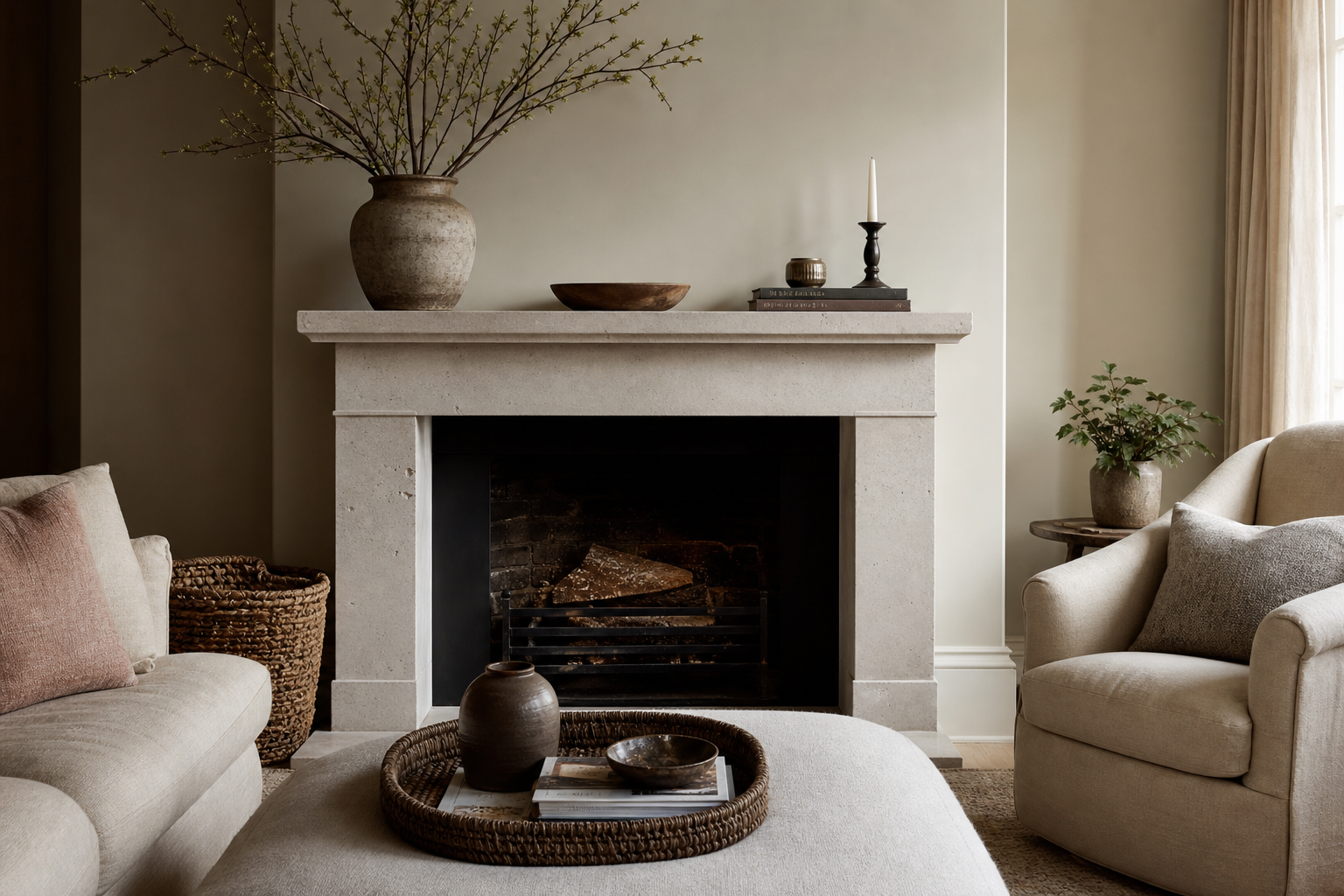
Look first at the larger elements in a room: rugs, curtains, armchairs, bedding and substantial cushions. If these are relatively quiet in pattern and colour, they can stay until Christmas and beyond. A textured wool throw, a checked cushion or a ceramic vase in a rich neutral can work across both seasons without needing to be replaced.
Natural materials are particularly useful for the transition. Wood, stoneware, woven baskets, linen, wool and dried branches bring autumnal warmth without fixing the room to one month. They also give Christmas greenery and candlelight something simple to sit against.
Use a three-part system: keep, swap and add
Before buying or unpacking anything, divide your decor into three groups. The first is the keep pile: pieces that can work from early autumn through winter. This might include plain cushions, warm throws, amber glass, wooden ornaments, baskets and neutral tableware.
The second is the swap pile. These are items that make the room feel specifically autumnal and can be replaced with a small number of Christmas alternatives. Examples include leaf-patterned cushions, pumpkin-shaped objects, orange-toned table linens and vases filled with autumn branches. Store these together so the changeover takes minutes rather than becoming a whole-house sort-out.
The final group is the add pile: decorations that can be introduced without removing much at all. Fairy lights, a wreath, evergreen stems, ribbon, candles and a few carefully chosen ornaments usually belong here. Keeping this category limited prevents the room from becoming crowded and makes the festive details more noticeable.
This system also helps with future decorating. When the season ends, you can remove the Christmas additions, return the autumn pieces and leave the adaptable foundation in place.
Change the colour story in small, deliberate steps
You do not need to replace every warm autumn colour with bright red and green. In many homes, Christmas will feel more balanced if the existing palette remains visible. Try introducing one or two festive tones rather than a complete colour change.
For example, a room built around cream, tan and rust could take on a Christmas character with deep green foliage, burgundy ribbon and a few aged-brass details. An olive and brown scheme could move towards Christmas with ivory candles, dark red berries and natural wood. If your autumn look is centred on terracotta, add evergreen and soft white rather than more orange.
Textiles are the quickest way to make this adjustment. Replace just the most obviously autumnal cushion covers with velvet, boucle or woven covers in a winter-friendly shade. Drape a darker throw over the arm of a sofa, or change a table runner while keeping the existing crockery and serving pieces.
Keeping the palette restrained means the room still feels like your home. It also allows Christmas decorations to become accents rather than competing with the furniture and architecture.
Work room by room instead of decorating everything at once
Living room
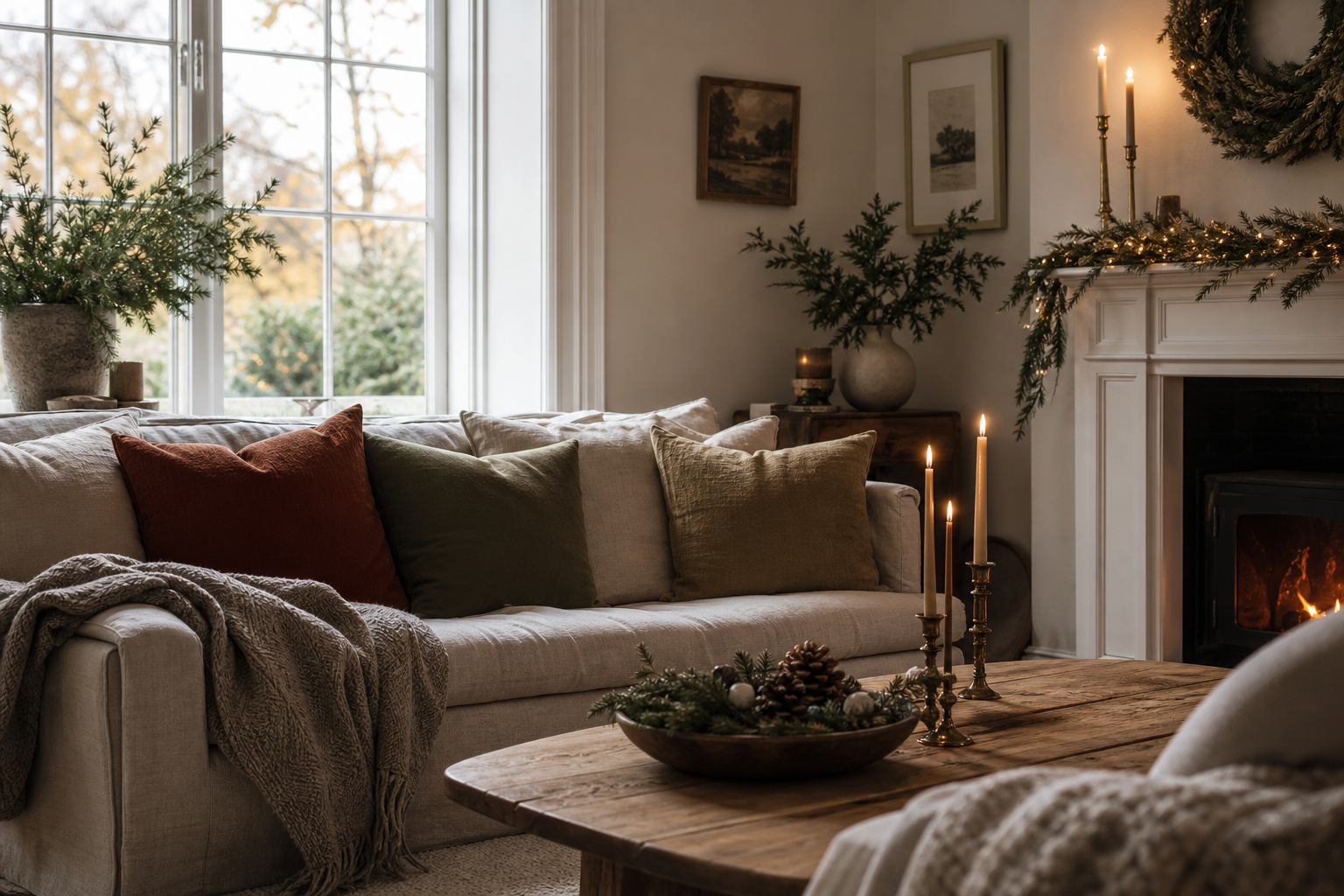
Leave the main soft furnishings in place and concentrate on the surfaces that naturally attract attention. Replace a bowl of autumn objects with a low arrangement of evergreen stems, pine cones or bare branches. Add warm-toned lights to a mantel, shelf or sideboard, making sure cables are discreet and safely positioned.
A wreath does not have to be reserved for the front door. A simple foliage wreath can be hung above a fireplace, on an internal door or over a console, provided it suits the scale of the space. If you already have framed art or a mirror as a focal point, avoid adding so much around it that the room loses its visual centre.
Dining area
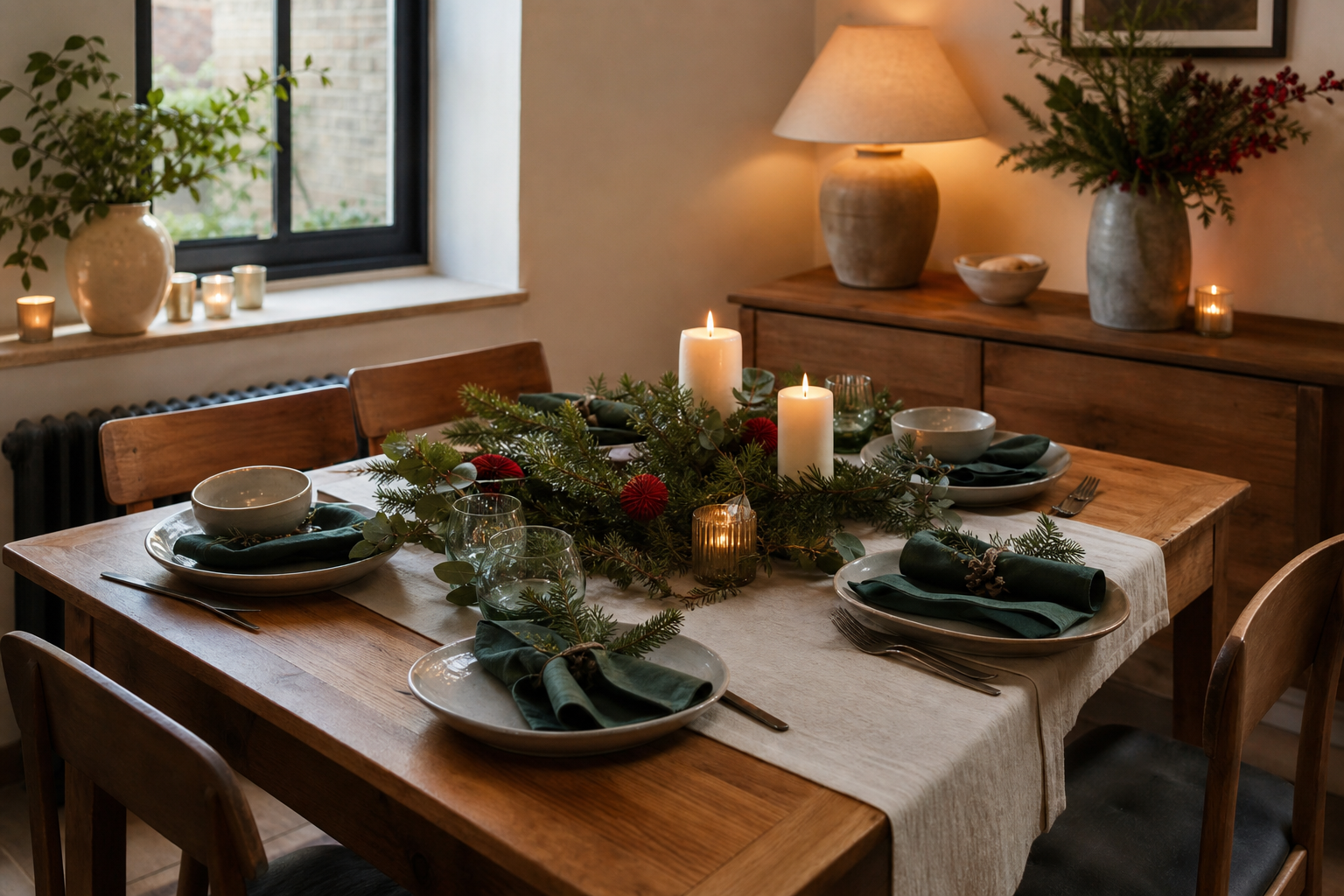
Keep everyday plates, glasses and serving bowls if they are neutral. Change the atmosphere with a runner, napkins, candleholders or a small arrangement down the centre of the table. Autumnal wood and ceramic pieces can remain, while evergreen foliage, red berries or metallic accents provide the seasonal shift.
Choose arrangements that are low enough for conversation and avoid scattering decorations across every available surface. A few repeated elements, such as the same ribbon on napkins and a wreath on a nearby wall, will make the dining area feel coordinated without requiring a full Christmas table setting.
Hallway and entrance
The entrance is a good place for the strongest seasonal cue because it sets the tone without requiring changes throughout the house. Swap an autumn arrangement for a winter branch, hang a wreath or introduce a lantern with a battery-operated candle. Keep the floor and door area clear, particularly where wet coats and muddy shoes are likely to collect.
Bedroom
There is rarely a need to Christmas-theme a bedroom. Retain warm bedding and soft throws, then add one winter-toned cushion, a small vase of foliage or a string of lights around a mirror or headboard area. This gives the room a seasonal connection while keeping it restful.
Choose decorations that can earn their storage space
When selecting festive additions, prioritise pieces that can be used in more than one location or at more than one time of year. Glass candleholders, plain brass objects, wooden decorations, velvet ribbon and simple ceramic houses can move between a mantel, dining table, shelf or bedroom.
Ribbon is especially versatile. Tie it around a wreath, use it on napkins, trim a vase or add a small length to a cabinet handle. It can create a consistent thread through the house without requiring matching sets of decorations.
Foliage is another efficient choice, whether fresh, dried or reusable. A few stems can be divided between several vases, and a branch arrangement can be updated with ornaments or ribbon as Christmas approaches. Use suitable vessels and keep natural materials away from heat sources, flames and walkways.
Plan the changeover in two stages
A gradual transition usually feels calmer than waiting for one large decorating day. During the first stage, remove only the most obvious autumn motifs and replace them with winter-friendly textures and colours. Leave the warm lighting, baskets, wood and neutral textiles in place.
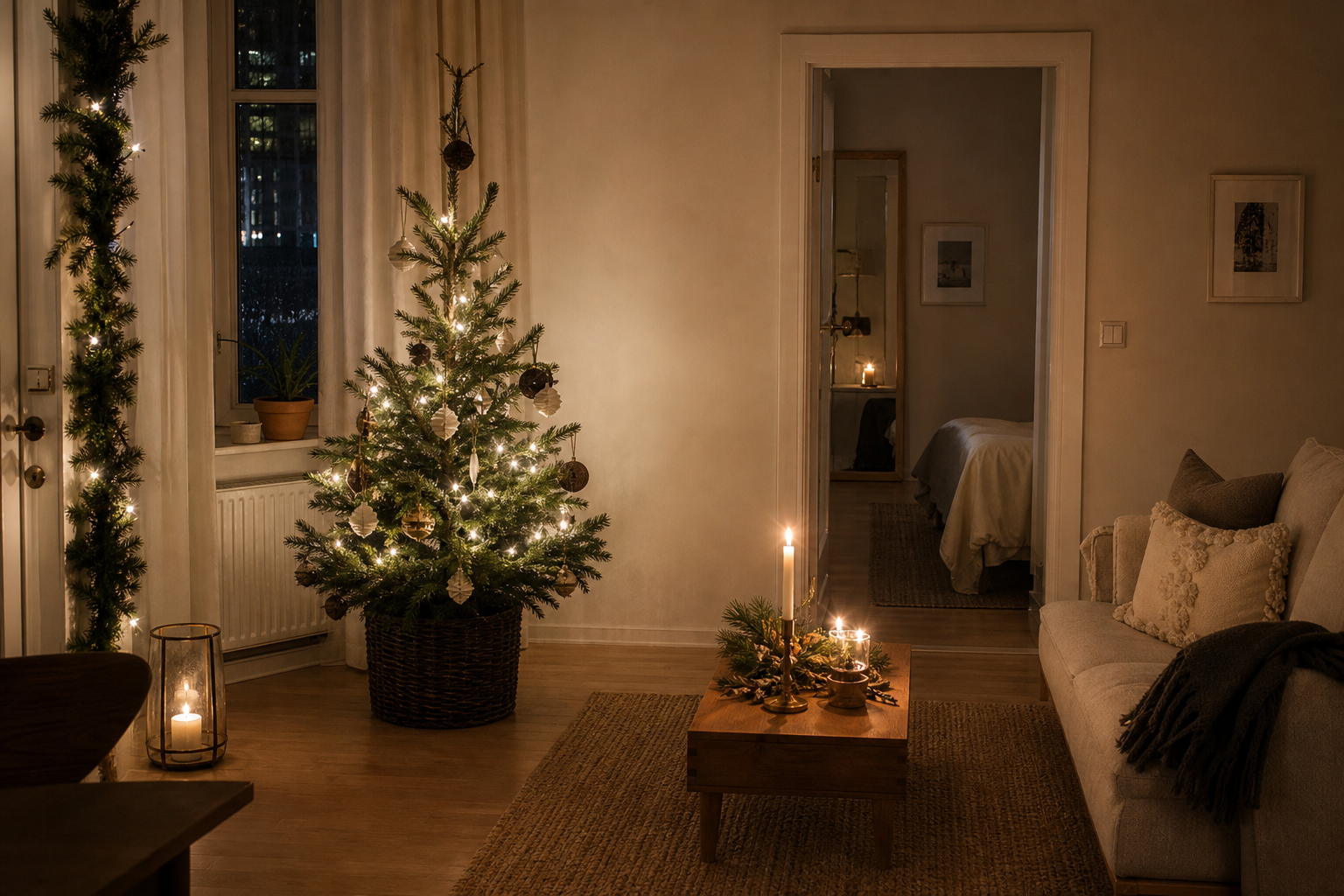
In the second stage, add the recognisable Christmas details: the tree, wreaths, stockings, ornaments and extra greenery. Because the background has already been adjusted, these additions should feel integrated rather than hurried.
It is also worth setting aside a small box for the decorations that need to come out first and another for the pieces that can wait until December. Labelled storage makes it easier to create a measured progression and stops every Christmas item being unpacked at once.
Keep the final edit intentionally light
Once the Christmas decorations are in place, walk through each room and remove anything that no longer has a purpose. If a surface feels crowded, take away one or two smaller objects before adding another. Christmas styling tends to look more polished when there is room around focal pieces.
Keep the items that provide warmth and comfort, then let a few well-placed festive details carry the seasonal message. With a flexible autumn foundation, Christmas becomes an edit rather than a complete redecoration: less to buy, less to store and much less to undo in January.