How to Style Curated Clutter Without a Messy Living Room
Curated clutter can make a living room feel personal, layered and welcoming rather than untidy. Learn how to edit, group and display books, objects and everyday belongings with more intention.
Our guides prioritise practical, original advice. Product links may be affiliate links, but they should only appear when they add something useful.
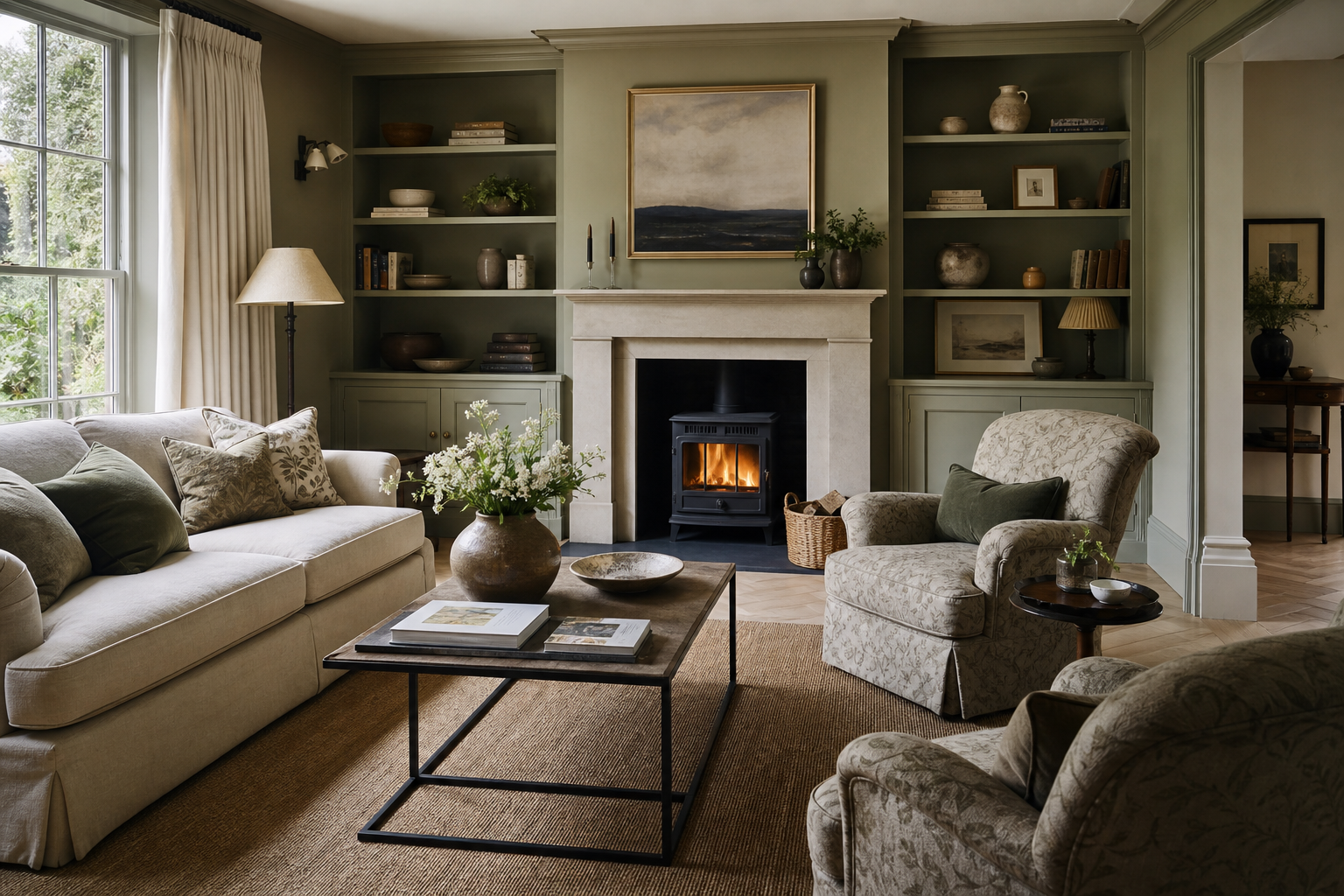
A living room rarely feels finished when every surface is completely bare. Books, framed photographs, lamps, baskets and well-chosen ornaments give the space warmth and tell visitors something about the people who use it. The challenge is knowing when a collection starts to look accidental rather than considered.
Curated clutter is not about buying more decorative objects or arranging everything into a rigid display. It is about choosing what deserves to be visible, giving similar pieces a relationship, and leaving enough breathing space for the room to feel calm. With a few simple rules, everyday belongings can look collected without making the living room feel messy.
Start by editing what is already on display
Before styling shelves, a coffee table or a sideboard, remove everything from the surface and sort it into three groups: keep visible, store elsewhere and let go. This temporary blank canvas makes it easier to see which objects genuinely suit the room and which are only there because they have always been there.
Keep items that are useful, meaningful or visually appealing. A well-used reading lamp, a favourite ceramic bowl or a small stack of books can earn its place in the room. Objects that are damaged, rarely used or difficult to clean may be better stored or moved to another part of the home.
Editing does not mean reducing the room to a handful of anonymous accessories. It means making the visible collection easier to read. If several objects serve the same purpose, choose the strongest example rather than displaying all of them together.
Give each surface a clear visual job
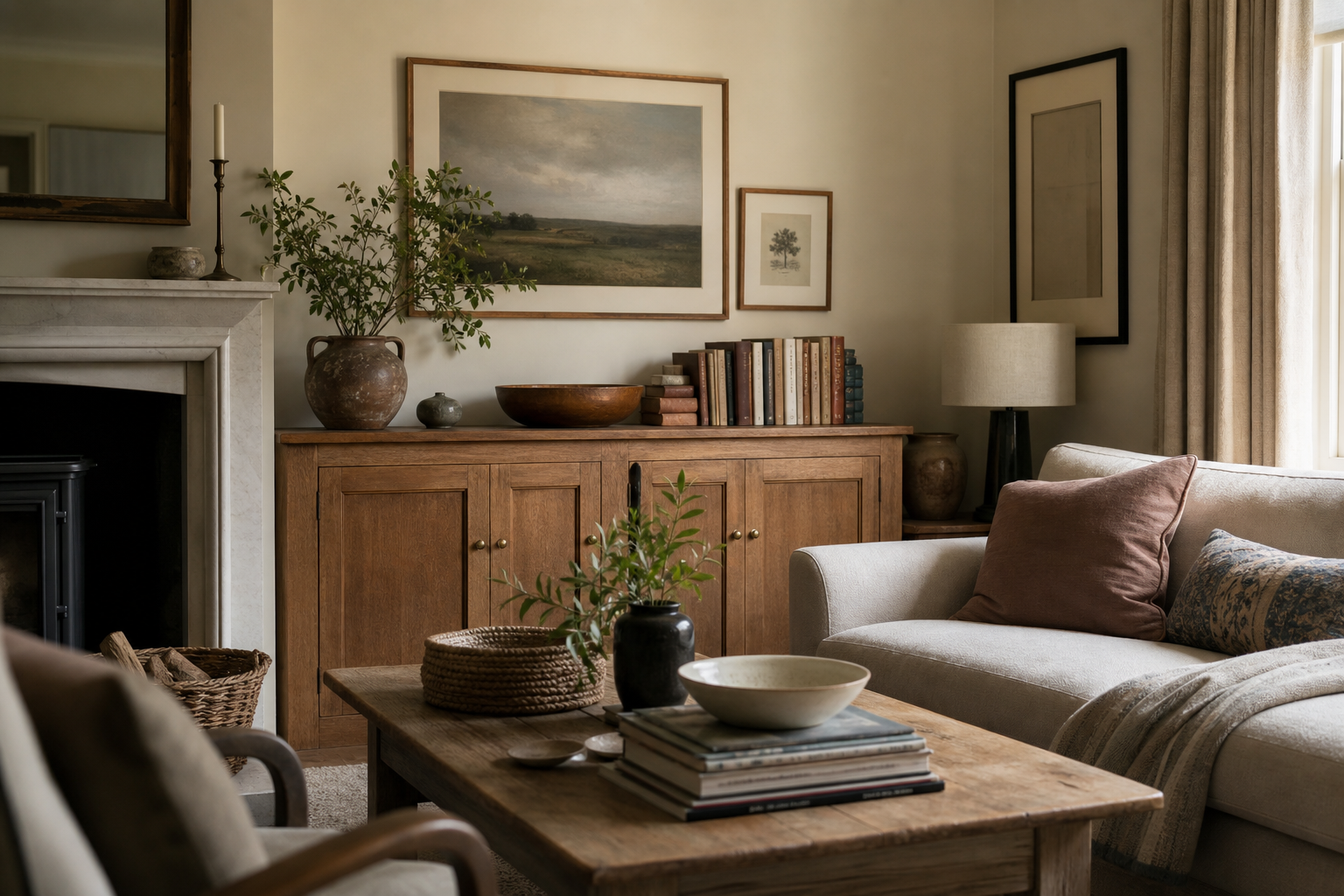
Clutter becomes harder to control when every surface is treated as storage. Decide what each area is for before putting objects back. A coffee table might hold reading material and one useful container, while a sideboard could provide space for a lamp, artwork and a small group of decorative pieces.
- Coffee table: keep the centre relatively open and use a tray to contain smaller items such as coasters, a candle or a remote control.
- Side table: combine one practical item, such as a lamp, with one or two personal objects.
- Sideboard: use the width for a deliberate arrangement, leaving some empty surface around it.
- Open shelving: mix books with objects, but avoid filling every section to the same level.
- Fireplace mantel: choose a focal arrangement rather than a row of unrelated ornaments.
This approach keeps useful belongings close at hand while stopping each surface from becoming a drop zone. If an item has no clear home, it may need a storage solution rather than a place in the display.
Group objects in small, deliberate arrangements
Individual objects can look scattered, even when they are attractive. Grouping them creates a visual structure. A practical rule is to arrange pieces in odd-numbered clusters of three or five, using differences in height and shape to create interest.
For example, a low bowl, a medium-sized framed photograph and a taller candlestick will usually feel more balanced than three objects of identical height. Another arrangement might combine a stack of two or three books with a small vase and a compact ornament. The pieces do not need to match, but they should share at least one connection, such as colour, material, theme or scale.
Use a tray, shallow dish or stack of books to anchor smaller objects. This gives the eye a boundary and makes the arrangement easier to move when the surface needs cleaning. Avoid spreading small pieces across a large area; a concentrated group often looks more intentional than a thin scattering.
Balance colour, texture and height
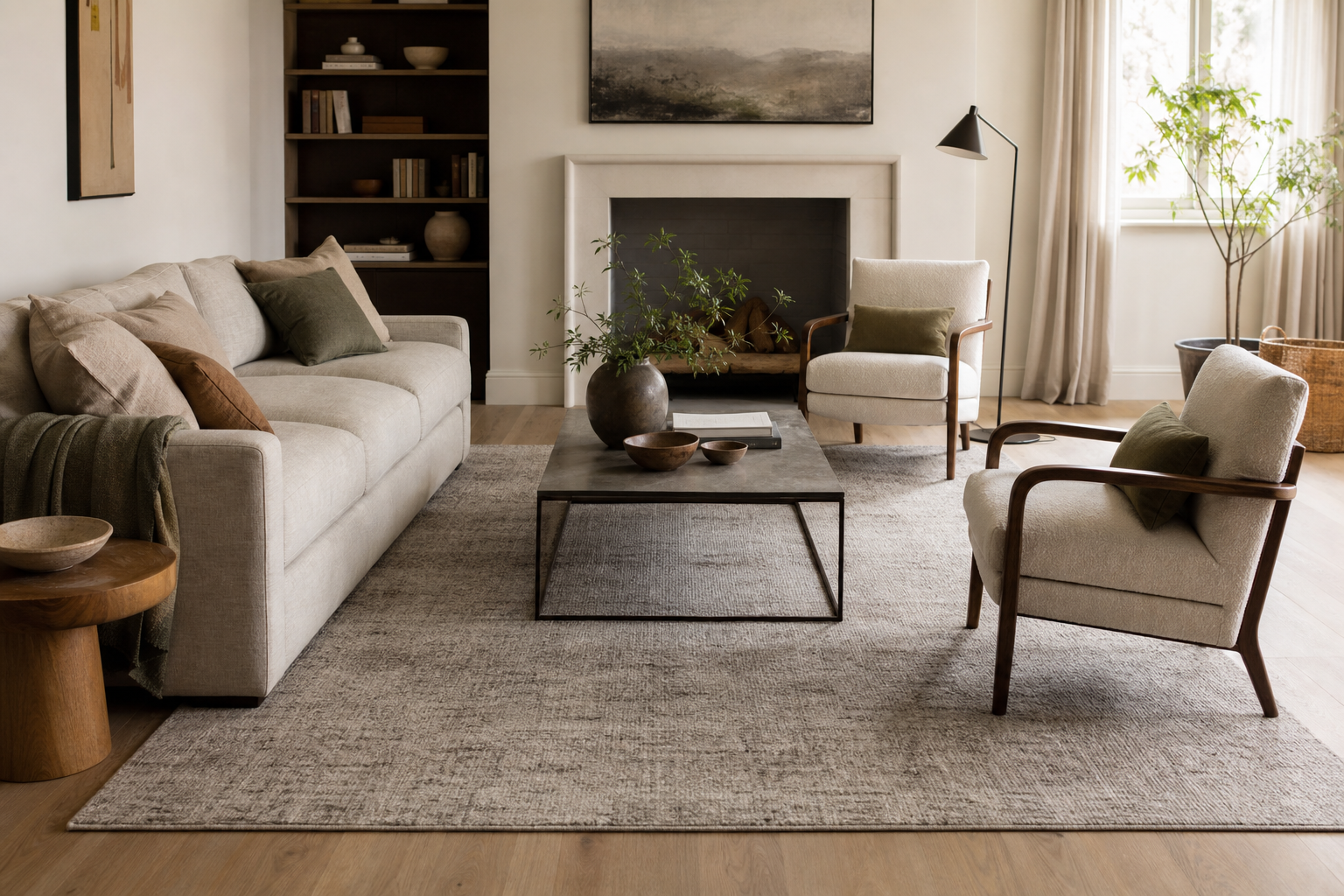
A curated display should have variation, but too many competing colours and finishes can make it feel noisy. Start with the existing palette of the room and repeat a few tones across the display. If the sofa, rug and curtains are mostly neutral, a collection of green glass, warm wood and muted ceramics can add depth without introducing a completely separate colour scheme.
Texture is useful when the palette is restrained. Pair smooth ceramics with woven baskets, glossy glass with aged wood, or hardbound books with a soft fabric lampshade. These small contrasts stop a neutral arrangement from appearing flat.
Vary height carefully. Taller pieces work well at the back of a shelf or towards one side of a sideboard, while low bowls and books can sit in front. Do not make every arrangement symmetrical. A slightly off-centre composition usually feels more relaxed, provided the visual weight is balanced on the other side.
Use books and artwork as structure
Books are one of the easiest ways to make a living room feel lived-in, but large piles can quickly become untidy. Keep the stacks stable and reasonably short, and place them where they are easy to pick up. A few books with attractive covers can be displayed face-up, while the rest can be arranged upright with bookends.
On shelving, vary the direction of the books. One section can hold a vertical row, another a horizontal pile, and a third can be left partly open for an object. This creates rhythm without making the whole unit look overly arranged.
Artwork can provide a stronger anchor than several small ornaments. Lean a framed print against the wall on a sideboard, layer a smaller frame in front of a larger one, or hang one substantial piece above a display. Keep the artwork connected to the furniture below it: a tiny frame above a wide sideboard may look lost, while a crowded gallery of small pieces can compete with the objects on the surface.
Hide the practical items that create visual noise
Not everything used in the living room needs to be displayed. Remotes, charging cables, games, paperwork and spare blankets are the items most likely to make a carefully styled space look untidy.
Use a lidded box, basket or drawer for the things that need to be nearby but do not need to be seen. A basket beside the sofa can hold blankets, while a small box on a shelf can contain chargers or controllers. Choose containers that suit the room’s materials and colours so that storage looks like part of the scheme rather than an afterthought.
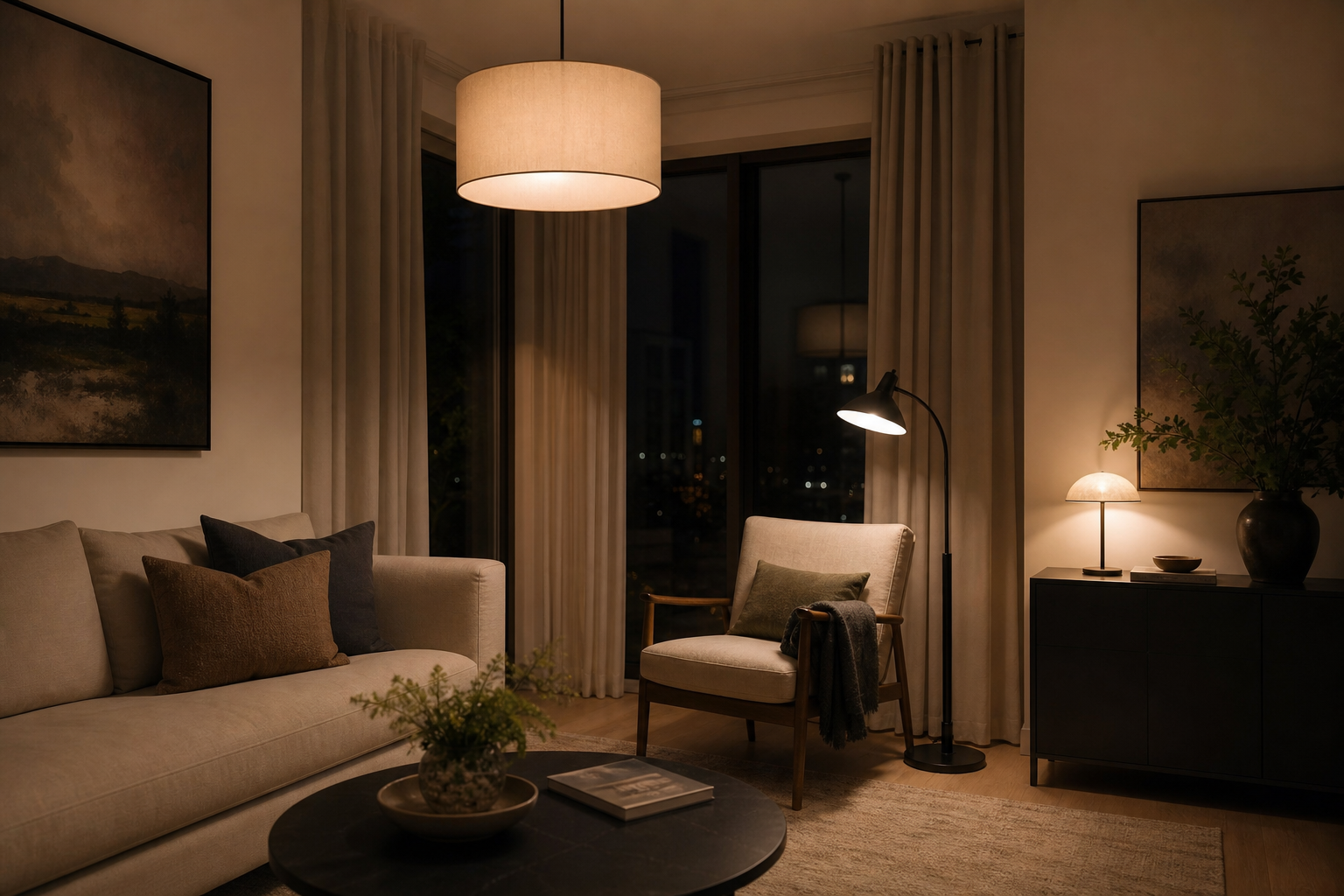
Leave cable routes as simple as possible. A lamp with a cable trailing across the front of a sideboard will disrupt even a well-edited display, so guide wires behind furniture where safe and practical. Keep paper and post out of decorative piles; a designated tray elsewhere is more effective than allowing them to spread across the room.
Leave breathing space and review the arrangement
Empty space is what allows curated clutter to look deliberate. Leave visible gaps between groups, avoid filling every shelf from edge to edge, and keep some of the coffee table available for everyday use. If an arrangement feels crowded, remove one item before adding anything new.
Step back and view the room from the doorway and from the main seating position. Look for areas where the eye stops because too many objects have the same visual weight. Moving one taller item, separating two similar pieces or removing a small ornament may be enough to restore balance.
Displays also need occasional editing. Seasonal objects can be rotated rather than added to what is already there, and items that no longer suit the room can be stored for a while. The aim is not a permanently perfect arrangement, but a living room that feels personal, usable and visually settled.
A calmer way to display the things you love
Curated clutter works best when every visible item has a reason to be there and each group has enough space to be understood. Edit first, create clear homes for practical belongings, then build arrangements with variation in height, texture and colour. The result should feel collected rather than crowded: a room with character that still gives everyday life room to happen.