How to Organise a Small Utility Room Without Losing Floor Space
Make a compact utility room easier to use by organising upwards, defining practical zones and choosing storage that does not obstruct the floor. This step-by-step approach also helps keep laundry and cleaning supplies under control.
Our guides prioritise practical, original advice. Product links may be affiliate links, but they should only appear when they add something useful.
A small utility room has to do several jobs at once: laundry, cleaning, drying, storage and sometimes housing the boiler or household recycling. The answer is not to squeeze in more freestanding furniture. It is to make better use of the walls, the backs of doors and the awkward gaps around appliances, while keeping the central floor area clear.
Start with what the room needs to do every day, then give each task a defined place. A simple layout is easier to maintain than a room full of containers that are difficult to reach.
Assess the room before buying storage
Take measurements of the full room, including the height from floor to ceiling, the width of the door opening and the space needed to open the washing machine, tumble dryer, cupboards and boiler access panels. Note where pipes, sockets, vents and radiators are positioned. These fixed features will determine where storage can safely go.
Pay particular attention to clearance in front of the washing machine and tumble dryer. You need enough room to load laundry, remove the filter and pull out any detergent drawer without having to move a basket or bin first. If the door opens into the room, keep its swing completely clear.
Before organising, remove anything that does not belong there. Outgrown cleaning tools, empty bottles, duplicate products and items waiting indefinitely to be taken elsewhere all use valuable space. Group what remains into broad categories such as laundry, general cleaning, shoe care, recycling and household spares.
Use the walls for everyday storage
Vertical storage is usually the most effective way to protect floor space. A shallow run of wall-mounted cupboards or open shelves can hold detergent, cloths and spare supplies without narrowing the walkway. Keep the deepest storage for items used less often, as reaching into a deep cupboard every day quickly becomes frustrating.
Open shelves work well for frequently used items, but they need some visual discipline. Use a small number of matching baskets or lidded boxes rather than filling the shelves with individual bottles. Label the front of each basket by purpose, such as “laundry”, “cloths” or “shoe care”, so the contents can be returned without rearranging everything.
Place everyday products between waist and eye level. Heavier items should sit on lower shelves, but not directly on the floor where they can be exposed to damp or become a trip hazard. Reserve the highest shelf for spare light bulbs, seasonal cleaning equipment or rarely needed stock.
Choose narrow storage for awkward gaps
Small gaps can be useful, but only if the storage can be removed or accessed easily. A slim pull-out unit may fit beside an appliance for bottles and cloths, while a narrow freestanding shelf can make use of a gap that is too small for a standard cupboard. Check the gap carefully before choosing anything, and allow room for skirting boards, pipes and appliance movement.
Avoid filling every narrow space with a separate item. Too many small units make the room harder to clean and can create a collection of awkward corners. One well-positioned, shallow storage unit is often more useful than several deep baskets.
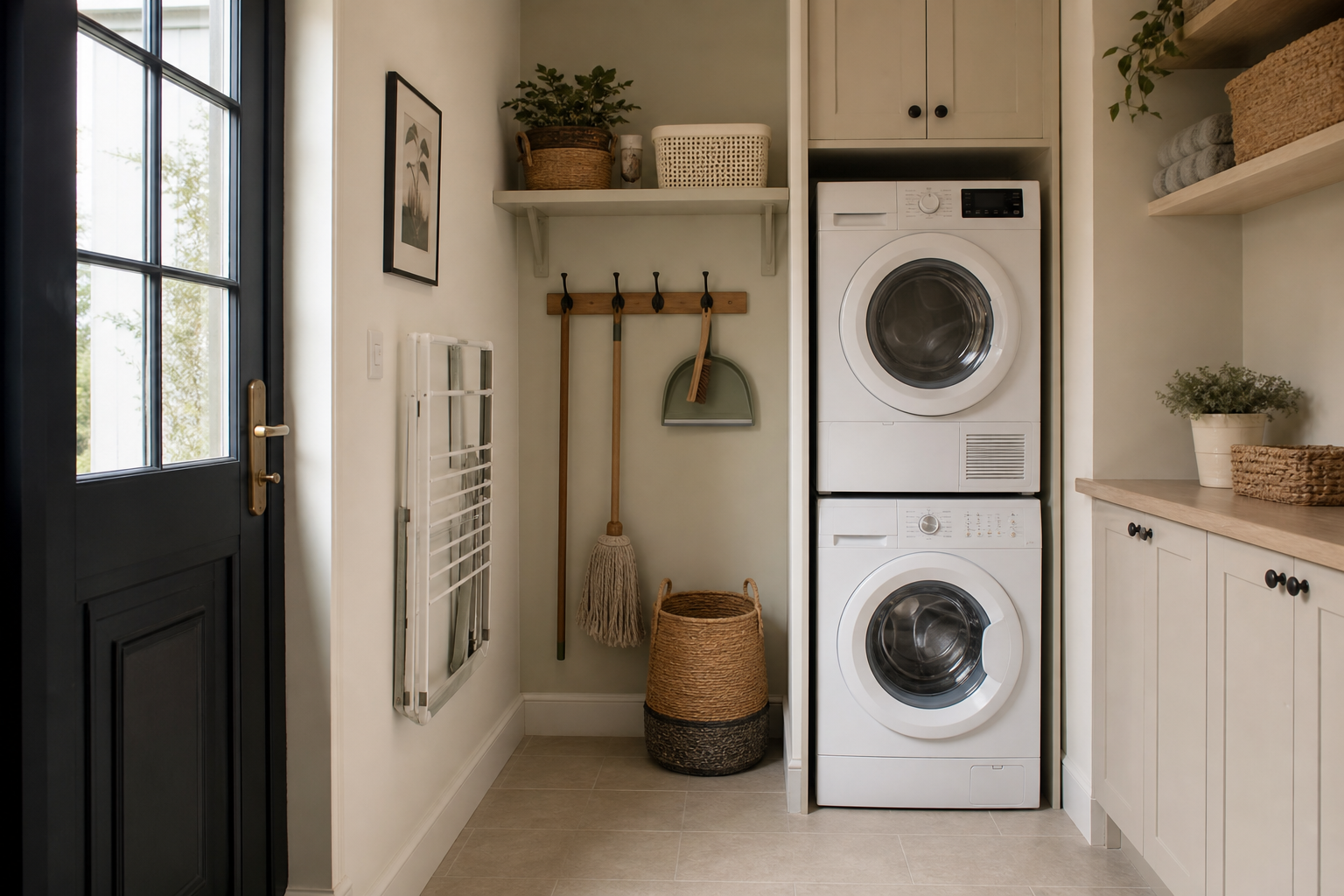
For tools such as a dustpan, brush, mop or feather duster, use wall hooks or a rail rather than a floor-standing holder. Mount them where they can be lifted out without moving other equipment. Keep handles together and store the tools with their working ends facing down or in a suitable holder, allowing them to dry properly after use.
Make the backs of doors work harder
The inside of the door can provide valuable storage without taking up any floor area. A slim over-door organiser can hold sponges, rubber gloves, refill pouches and small bottles. Choose one that does not prevent the door from closing fully or obstruct handles and hinges.
Alternatively, attach a few suitable hooks to the inside of the door for reusable laundry bags, a small dustpan or a folding drying rack. Check the door construction before fixing anything permanently, particularly if it is hollow or has a fire-resistance requirement.
Keep door storage light and shallow. Bulky items can make the door difficult to open and may damage the hinges over time. The door is best for small, lightweight things that otherwise tend to gather around the sink or on top of appliances.
Create clear zones around the laundry appliances
Organise the room according to the order in which laundry happens. A hamper or divided laundry basket should be close to the entrance or washing machine, so dirty clothes do not have to cross the room. Keep detergent and stain-treatment products near the machine, but place them on a shelf or in a cupboard rather than on the appliance if vibration could make them fall.
If the washing machine and tumble dryer are stacked, use the surrounding wall space for baskets and folding. If they sit side by side, a secure worktop above them can provide a useful folding surface and prevent small items from being dropped down the sides. The worktop should not block ventilation, servicing access or the opening of appliance doors.
Give clean laundry a temporary home. A single labelled basket or a wall-mounted rail is enough for clothes waiting to be folded or put away. Without a defined landing place, clean laundry often ends up on the floor, on top of machines or in front of the door.
For a drying rack, choose a folding wall-mounted design or store a collapsible rack vertically on hooks. It should be possible to take it down in one movement, rather than having to shift several boxes first.
Control cleaning products and household stock
Keep only the quantity that suits the available storage. Buying several large bottles at once can make a small room feel permanently crowded, even when the products are useful. Store back-up supplies together so you can see what you have before adding more to the shopping list.
Use a leak-resistant tray for bottles and refill containers. This protects the shelf and makes it easier to remove a group of products for cleaning. Keep labels visible, and do not decant products into unmarked bottles. Cleaning chemicals should remain in their original containers and away from children and pets.
Do not store incompatible cleaning products together in a way that could cause spills to mix. Follow the instructions on each product, keep the room ventilated when using strong cleaners and leave access to the boiler, stopcock, fuse box and other essential services unobstructed.
For recycling, choose a narrow lidded bin or a set of stackable containers only if they can be lifted out without emptying the whole area. Empty them regularly. A recycling system that is technically tidy but difficult to reach will soon become another source of clutter.
Leave space for cleaning and reset the room
The floor should be easy to sweep and mop, with no collection of loose bottles, baskets and tools around the edges. Raise storage where possible and keep a small clear area in front of the appliances. This makes routine cleaning quicker and helps reveal leaks or dropped items early.
Give every category a simple return point. When a cloth is washed, a bottle is opened or a basket is emptied, it should be obvious where it goes next. Once a week, return stray items, wipe the worktop and check whether anything is being stored on the floor because its assigned space is inconvenient.
A compact utility room does not need to hold every household supply. Keep the items used most often within easy reach, store occasional equipment higher up or elsewhere, and protect the central floor area as working space. That balance will make the room feel larger and keep the organisation practical.