How to Arrange Your Fridge for Less Waste and Easier Meals
A practical fridge layout can make ingredients easier to find, use and rotate. Use simple zones, sensible storage and a quick weekly reset to keep food visible without constant tidying.
Our guides prioritise practical, original advice. Product links may be affiliate links, but they should only appear when they add something useful.
A crowded fridge can make everyday cooking harder than it needs to be. Ingredients disappear behind taller items, leftovers are forgotten and the door becomes a jumble of half-used jars. The answer is not necessarily more containers or a perfectly styled interior. A simple layout that gives each type of food a sensible place can make the contents easier to see and use.
The best system is one that matches how your household eats. Keep frequently used items within easy reach, store foods according to their needs and avoid filling every gap. Once the basic arrangement is in place, a short weekly check should be enough to keep it working.
Start by clearing the fridge properly
Before deciding where everything should go, take the contents out and give yourself a clear view. You do not need to empty the freezer or reorganise the whole kitchen at the same time; focus on the fridge itself, including the drawers and door shelves.
- Check use-by dates and discard food that is no longer safe to eat.
- Group open jars, sauces and condiments so you can spot duplicates.
- Wipe spills and crumbs from shelves, drawers and seals.
- Remove bulky packaging where it makes food difficult to see, while keeping any useful cooking or storage information.
- Note food that needs using soon before putting anything back.
As you clear the fridge, pay attention to what is regularly left untouched. That may indicate that it is hidden, stored in an inconvenient place or being bought in quantities that do not suit your routine.
Create zones based on how you use food
Rather than assigning a shelf to every individual ingredient, create broad zones that are easy to remember. A useful starting point is to separate ready-to-eat food, ingredients for cooking, drinks and items that need extra care.
Keep leftovers, prepared lunches, washed fruit and other ready-to-eat food together where possible. This makes them easier to spot when you are hungry and reduces the chance of placing uncooked ingredients above food that will be eaten without further cooking.
Use one area for everyday cooking ingredients such as opened vegetables, herbs, tofu, cheese or other items you reach for regularly. If your fridge has an adjustable shelf, position it so commonly used containers fit without being stacked several layers deep.
Reserve a clear section for food that needs using soon. This might include an opened tub, a softening vegetable, cooked grains or leftovers from the previous evening. The point is not to create a permanent dumping area, but to give reminders a visible home.
Keep drinks together if they take up considerable space. If your household uses milk frequently, a shelf may be more practical than the door, especially if the door is already crowded. The arrangement should reflect your actual habits rather than a fixed idea of where each product ought to go.
Use the shelves, drawers and door for different jobs
Different parts of a fridge are suited to different types of storage. Follow the instructions for your appliance, as temperatures and features vary, but the following approach is a useful general framework.
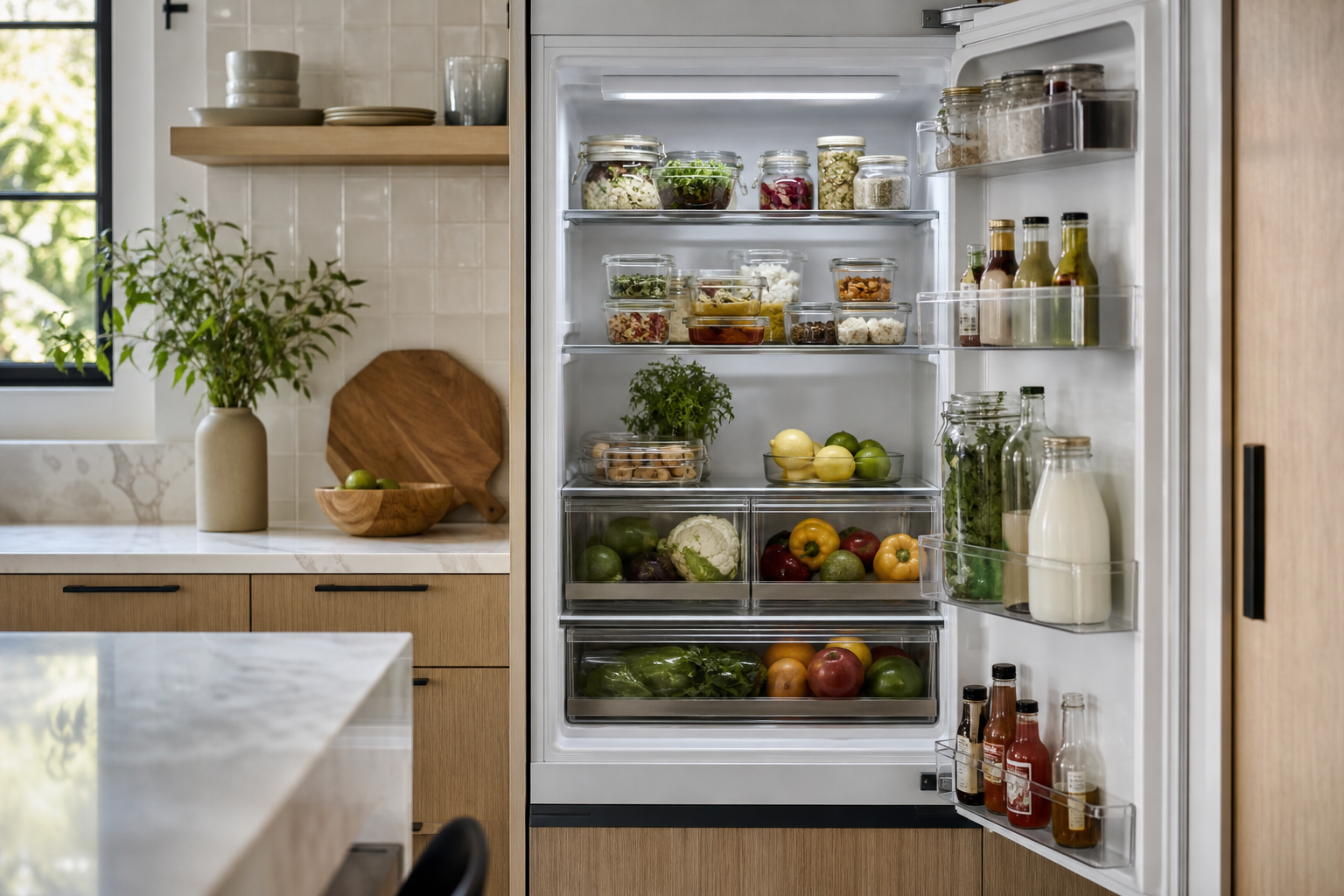
- Upper shelves: Use for ready-to-eat food, leftovers, cooked ingredients and items you want to remember to use.
- Middle shelves: Use for everyday dairy, prepared ingredients and foods that benefit from being kept together.
- Lower shelf: Keep raw meat, poultry and fish in sealed containers here so they cannot drip onto food stored below. Follow the storage guidance on the packaging.
- Drawers: Use these for fruit, vegetables and salad ingredients, separating items where your fridge instructions recommend it.
- Door shelves: Use for condiments, sauces, spreads and other products suited to the slightly less stable temperature of the door. Avoid treating the door as the default place for everything.
Do not overload a shelf just because there is room. Air needs to circulate inside the appliance, and tightly packed food is harder to inspect. Leave enough space to remove one container without moving several others.
Make food visible without decanting everything
Clear containers can be helpful, but you do not need to transfer every ingredient into matching boxes. A few small changes often make a bigger difference.
Place short containers towards the front and taller items towards the back. Use a shallow tray for small jars, tubes or packets so they do not spread across the shelf. Group similar items together, but keep the groups loose enough to see what is behind them.
For leftovers, use containers that are easy to stack and not too deep. A wide, shallow container can make the amount of food easier to judge than a tall opaque tub. Label containers with the date they were stored if you are unlikely to remember when they were made. This is especially useful when several meals look similar.
Keep one small area free for newly opened or partly used food. It can be tempting to push these items to the back, but visibility is more useful than a flawless row. If you regularly forget herbs, grated cheese or half-used vegetables, keep them together in a labelled tray at the front of a shelf.
Organise the fridge around meals, not just ingredients
A food category system is helpful, but meal-based groupings can be more practical for busy days. Consider which combinations you often use and store them near one another without creating unsafe storage arrangements.
For example, salad ingredients can sit in the same general area, while breakfast items may be grouped where they are easy to reach. Ingredients for a planned meal can be placed together on a tray, provided raw foods remain sealed and are stored appropriately. This reduces the number of shelves you need to search when cooking.
You can also create a small “eat first” section. Use it for food that has been opened, leftovers and fresh produce that will not keep as long as the rest. Keep the section visible and modest in size; if it becomes a place where everything is pushed, it will stop being useful.
When putting away a new shop, move older items forwards and place newer items behind them. This simple first-in, first-out habit helps prevent forgotten food without requiring a detailed inventory.
Keep the system working with a weekly reset
A fridge does not stay organised through one large clear-out. A short reset once a week is more realistic and gives you a chance to adjust the layout as your meals change.
- Remove anything that is clearly past its use-by date or no longer suitable to eat.
- Bring food that needs using soon to the front.
- Check leftovers and decide whether they will be eaten, frozen or discarded according to safe storage guidance.
- Wipe any fresh spills before they dry.
- Combine duplicates where appropriate and return each item to its zone.
- Make a short note of ingredients that need using when planning the next few meals.
Keep the reset quick enough to repeat. If a shelf is continually difficult to manage, change the system rather than repeatedly forcing it back into place. A useful fridge arrangement should save effort, not create another household chore.
What to avoid when arranging a fridge
Some habits make a fridge look organised while making it less practical. Avoid stacking food so high that the back of a shelf becomes invisible. Do not use the door for items that need the coldest or most consistent storage unless your appliance guidance specifically supports it. Avoid storing raw food above ready-to-eat food, and keep leaking packaging in a sealed container.
It is also worth resisting the urge to buy storage accessories before observing the problem. A tray may help contain small items, but too many boxes can reduce usable space and hide what you already own. Start with a clear-out and a layout; add only what solves a recurring issue.
A well-organised fridge is not an empty or colour-coordinated one. It is a fridge where you can see what you have, reach the food you need and notice what should be used next. Choose a few clear zones, keep raw and ready-to-eat foods safely separated, and make the weekly reset part of your normal kitchen routine.