How to Mix Bedroom Furniture Without a Mismatched Look
A bedroom does not need a matching furniture set to feel considered. Learn how to combine different woods, finishes and shapes while keeping the room visually calm and cohesive.
Our guides prioritise practical, original advice. Product links may be affiliate links, but they should only appear when they add something useful.
A bedroom can feel more personal when its furniture has been gathered rather than bought as one complete set. A vintage chest beside a modern bed, or painted bedside tables paired with a timber wardrobe, can add depth and character. The challenge is making those differences look deliberate instead of accidental.
The key is not to make every piece identical. Instead, create a few clear connections between the furniture through colour, proportion, shape and finish. Once those links are in place, contrasting pieces can sit comfortably together and the room will feel layered rather than mismatched.
Start with the largest piece in the room
The bed usually has the greatest visual presence, so use it as the starting point for the rest of the furniture. Look at its material, colour and overall shape before choosing bedside tables, drawers or a wardrobe.
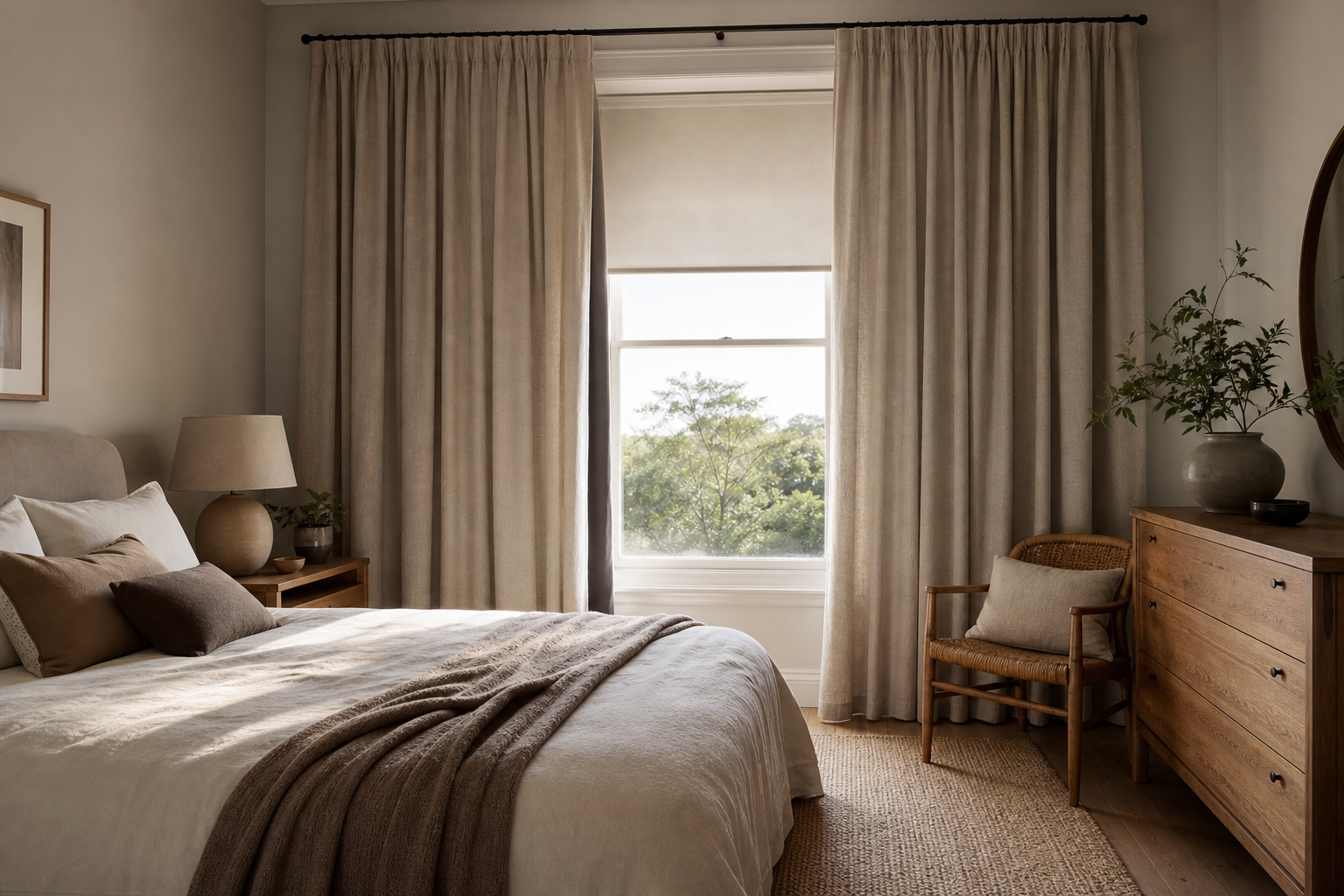
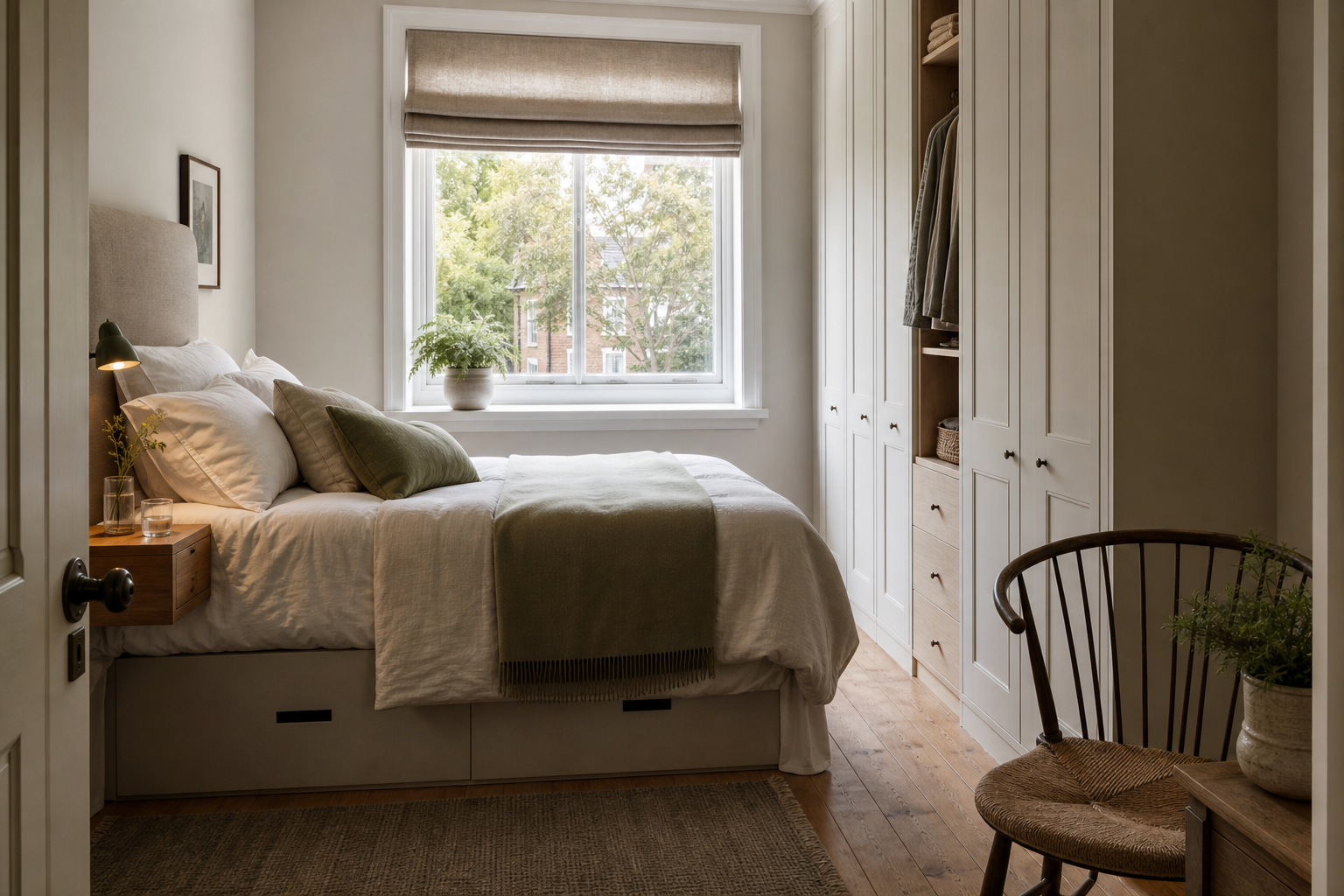
A simple wooden bed can work with painted furniture, provided another element in the room repeats or complements the timber. A softly upholstered bed can balance more substantial wooden storage, while a slim metal frame may suit furniture with similarly light, unfussy lines.
Consider the bed’s height as well as its finish. Low furniture generally looks more natural alongside a low bed, whereas a tall, traditional headboard may need sturdier bedside tables or a larger chest to prevent the arrangement feeling top-heavy. You do not need exact measurements across every piece, but the proportions should make sense when viewed together.
Choose one unifying thread
Different furniture styles need a common detail to stop the room becoming visually noisy. Choose one or two features to repeat across the space rather than trying to match everything.
- Colour: Repeat a soft white, warm grey, deep green or another furniture colour in smaller details such as a lamp, cushion or artwork.
- Material: Link a timber bedside table to a wooden mirror frame, picture frame or storage basket.
- Hardware: Similar brass, black or chrome handles can quietly connect furniture from different periods.
- Shape: Echo curved edges, straight legs or simple rectangular forms in more than one piece.
- Finish: A mixture of painted and natural timber can work when both finishes have a similarly muted, understated quality.
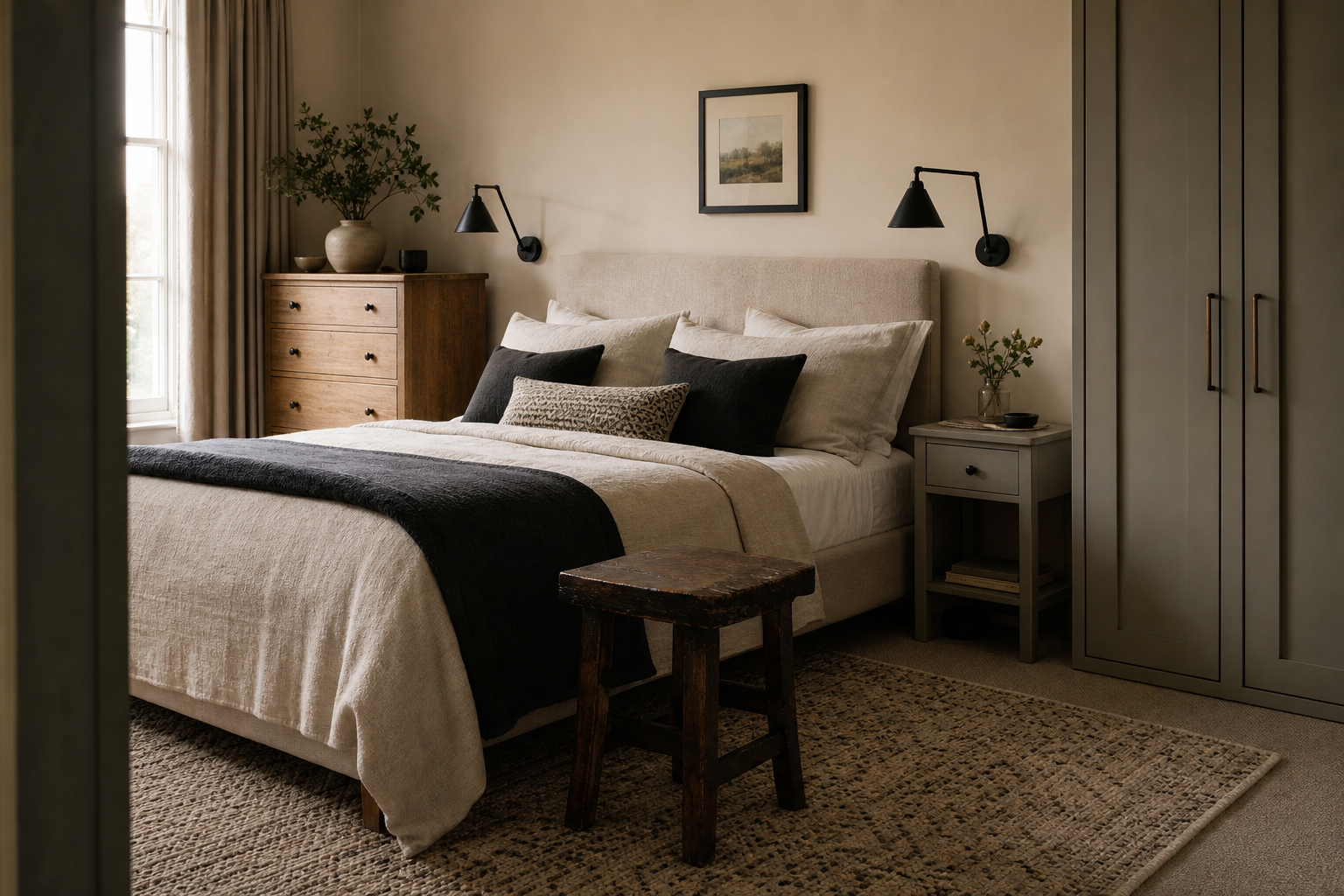
One strong thread is often enough. For example, a dark-stained chest, black-framed mirror and black bedside lamp can tie together a pale upholstered bed and painted wardrobe without requiring every item to match.
Limit the number of wood tones
Wooden furniture can be mixed successfully, but several unrelated tones may make a bedroom feel unsettled. As a general approach, keep the main timber finishes to two or three, then use the rest of the room to soften the transition.
Warm oak, honey-coloured pine and reddish wood may compete if they are all used in similar amounts. A calmer combination might pair one dominant timber with a smaller amount of a contrasting tone. For instance, medium oak furniture can sit alongside a darker bedside table when the darker wood is repeated in another small detail.
Undertones matter. Woods with warm yellow or red notes tend to sit more naturally together than a warm timber next to a very cool, pale grey wood. That does not mean you must avoid contrast, but it helps to view samples in the actual bedroom, where daylight and warm bulbs can change how the finishes appear.
If the existing furniture already includes several wood tones, create a visual buffer with painted pieces, upholstered surfaces, a rug or bedding in a calm neutral colour. This gives the eye somewhere to rest between the different finishes.
Balance old and new furniture
Combining furniture from different eras can give a bedroom a collected feel, but balance is important. If every piece has a strong decorative style, the room may feel crowded. If all the furniture is extremely plain, the contrast may not add much character.
Try pairing one distinctive piece with quieter companions. A carved chest can become the focal point beside a simple bed and streamlined bedside table. Equally, a modern bed can provide a clean background for an ornate mirror or a traditional wardrobe.
Pay attention to visual weight. A solid antique chest may need a substantial lamp or a wider piece nearby, while delicate furniture can look overwhelmed by a large, heavy wardrobe. Balance does not require symmetry, but the heavier items should be distributed across the room rather than gathered on one side.
Use scale to make different pieces work
Furniture can look mismatched simply because the proportions are awkward. Measure the available wall space and compare the height and width of each piece before bringing anything into the room.
Bedside tables usually look more settled when their tops sit close to mattress height, although a small difference can add an informal feel. A chest that is much narrower than the bed may look lost, while an oversized one can dominate the room. If a wardrobe is tall and imposing, keep the furniture opposite it visually lighter or leave enough clear wall and floor space around it.
Legs also affect how pieces relate to one another. Furniture with exposed legs tends to feel lighter than pieces that reach the floor. Mixing both can work well, but avoid placing all the bulky furniture together. A rug can help connect separate items and make a group of pieces feel like one considered arrangement.
Repeat contrast instead of hiding it
There is no need to disguise every difference. A contrasting piece looks intentional when its colour, material or silhouette appears elsewhere in the room.
For example, a black-painted chest can be repeated through a picture frame, reading lamp or curtain pole. A rattan bedside table can be supported by a woven basket or cane-fronted storage. A curved vintage mirror can relate to rounded lamp shades, a circular rug or softly shaped cushions.
Keep repeated accents at different heights so they do not form a rigid line. A dark detail near the floor, another at bedside level and a third higher on the wall will distribute the colour around the room. This small adjustment can make a mixture of unrelated furniture feel much more cohesive.
Style the gaps between the furniture
Accessories can help bridge differences, but they should not be used to clutter every surface. Leave some breathing room on bedside tables and chests, then choose a few items that reinforce the room’s shared palette.
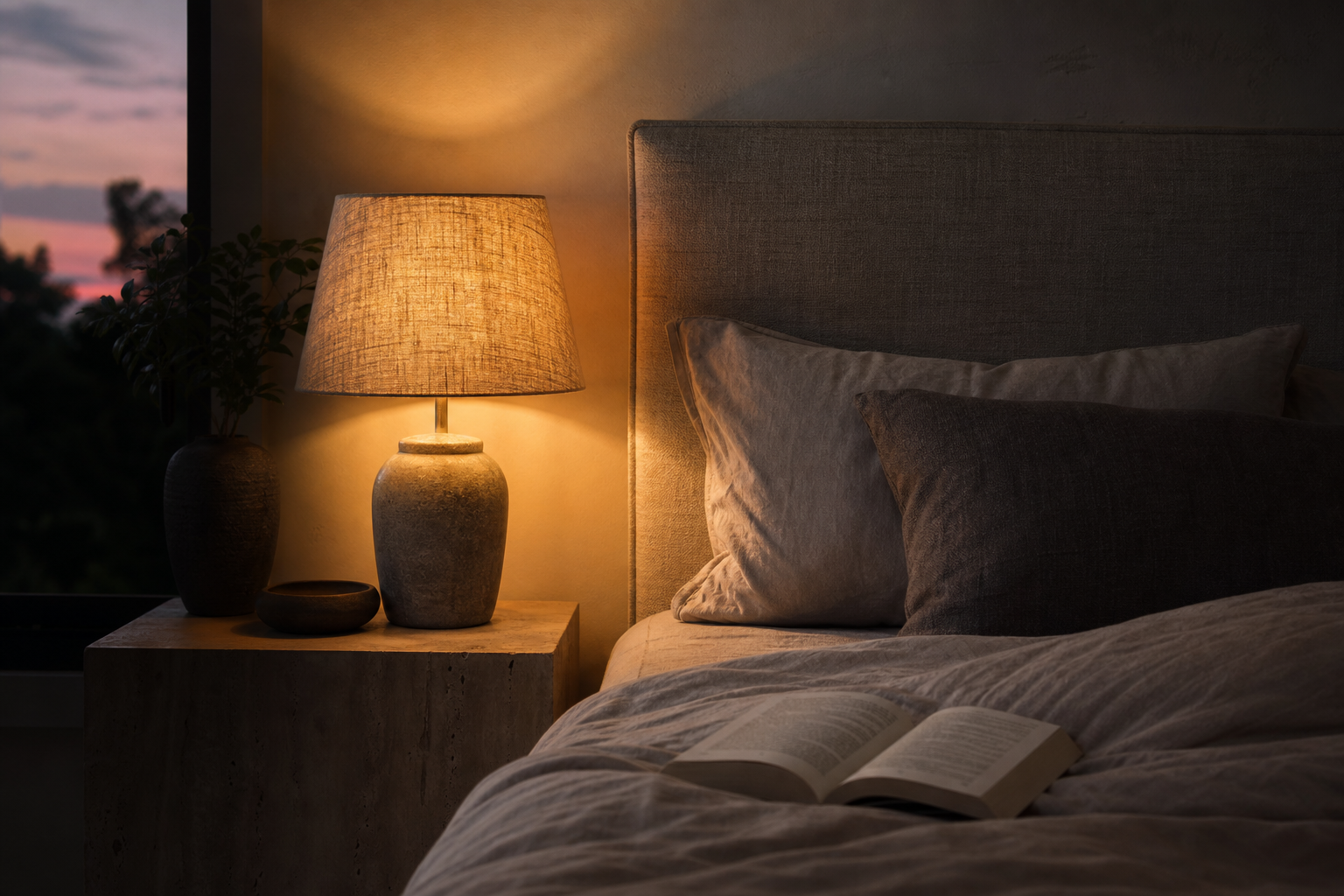
Matching lamps are not essential, especially when the bedside tables are different. You could use lamps with the same shade colour but different bases, or choose two different lamps that are similar in height. Bedding, curtains and a rug can also soften strong contrasts between furniture finishes, particularly when they share one quiet neutral tone.
Wall colour matters too. A gentle off-white, muted neutral or soft shade can provide a consistent background for varied furniture. Strong wall colour can be effective, but it becomes another major element, so keep the furniture finishes and accessories more restrained.
Make changes gradually
When a bedroom feels mismatched, replacing everything is rarely necessary. Move the existing pieces around first, then remove anything that seems to compete with the main furniture. A simpler arrangement often reveals which pieces genuinely work together.
Next, identify the biggest gap: perhaps the wood tones need a buffer, the furniture lacks a repeated colour, or one item is too large for its position. Address that single issue before adding more accessories. A new handle, painted finish, lamp or framed print may be enough to connect the pieces.
The most successful mixed-furniture bedrooms usually combine variety with repetition. Keep the bed and storage practical, choose a limited palette, repeat a few materials or shapes, and allow one or two distinctive pieces to stand out. The result will feel collected and individual without looking as though every item came from a different room.