How to Make a Small-Kitchen Coffee Station Work
A well-planned coffee station can make a small kitchen feel calmer, not more crowded. Here is how to choose its location, organise the essentials and add useful style without sacrificing worktop space.
Our guides prioritise practical, original advice. Product links may be affiliate links, but they should only appear when they add something useful.
A coffee station does not need a dedicated cabinet, a large worktop or a collection of specialist equipment. In a small kitchen, the most successful setup is usually a compact zone where everything needed for making a drink is easy to reach, while less frequently used items are kept close by rather than left out.
The aim is to create a useful routine rather than a display of appliances. With a little planning, a short stretch of worktop, an open shelf or a cupboard near the kettle can become a neat coffee station that suits the way you actually use the kitchen.
Choose a practical place first
Start by looking at how your kitchen already works. The best position is often near the kettle, sink or main preparation area, because water and cleaning are part of making coffee. A corner of the worktop may be suitable, but avoid placing the station where it interrupts food preparation or leaves no room to put down a mug.
Measure the available width and depth before choosing containers or equipment. Remember to allow space for handles, cables and the movement of cupboard doors. A narrow area beside a fridge or at the end of a run of units can work well, provided the door can still open fully.
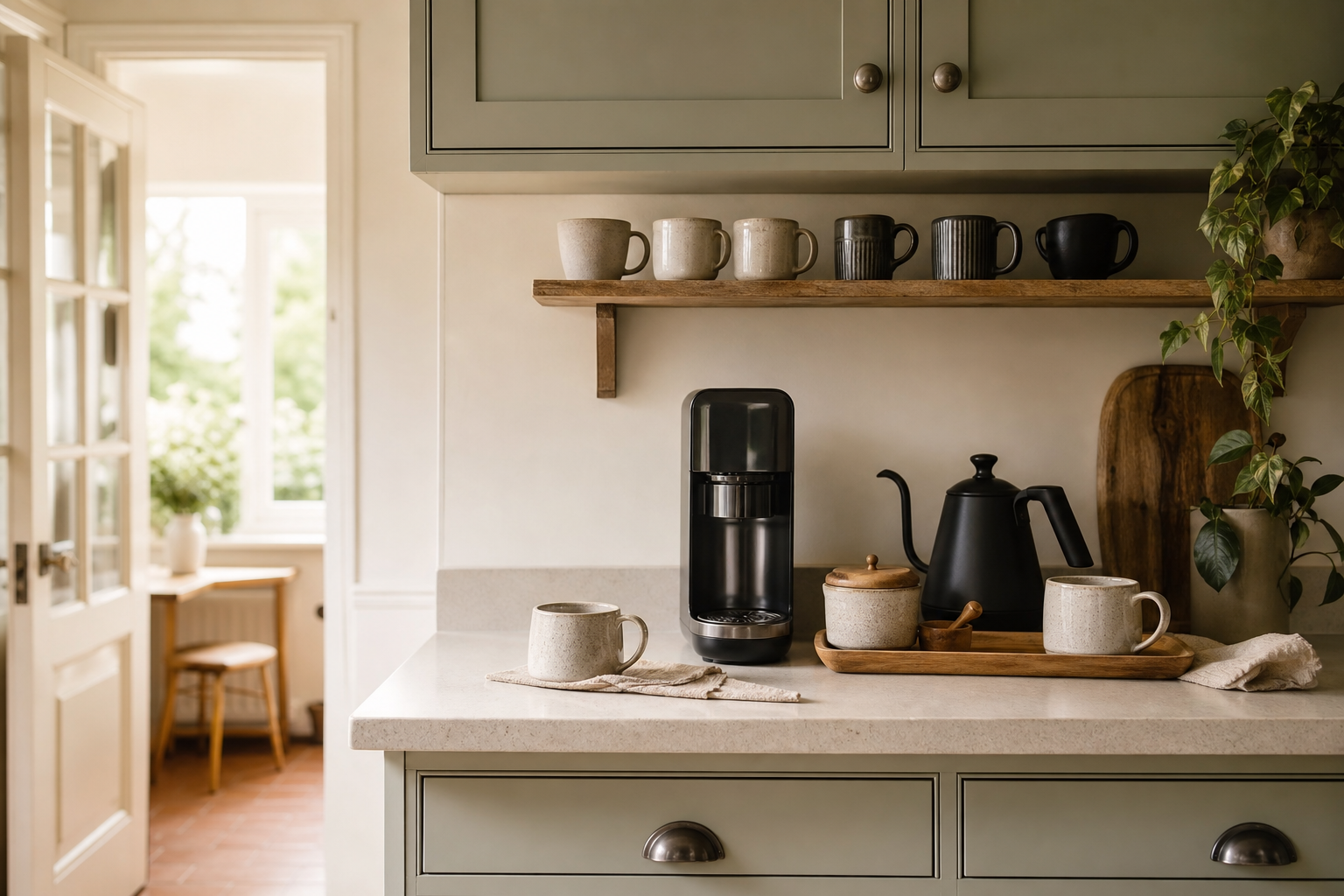
If the worktop is already busy, consider using a cupboard as the main storage point and leaving only the kettle or coffee maker on display. Another option is a small tray that gathers the everyday items together. It can be lifted and moved when the surface is needed for cooking, which is particularly useful in a single-room kitchen.
Decide what belongs in the everyday zone
A coffee station becomes cluttered when it tries to hold every possible drink and accessory. Choose the items used most often and keep the rest elsewhere. Depending on your routine, the everyday group might include a coffee maker, mugs, coffee, a spoon, sweetener and a cloth for small spills.
There is no need to copy a café-style arrangement. If you use a cafetière, it may be all you need alongside the kettle and coffee. If you prefer pods, keep a modest selection in a compact box rather than displaying several packets. For ground coffee, an airtight container with a wide opening is easier to use than a tall jar that needs to be moved every morning.
Think about sequence as well as appearance. Place the coffee and mugs near the machine, then keep spoons or measures where they can be picked up without crossing the main cooking area. This simple order makes the station feel more considered and prevents small items from spreading across the worktop.
Use height and hidden storage carefully
In a small kitchen, vertical space can be more valuable than another item on the worktop. If there is a wall shelf above the station, use it for mugs, coffee containers or one or two decorative pieces. Keep heavier appliances on a stable surface rather than on a shelf, and avoid storing anything directly above a hob or a place where steam and grease collect.
A rail with a few hooks can hold mugs without taking up cupboard space, but it should be positioned where handles will not catch on people passing by. Open storage works best when the number of items is limited and similar-looking pieces are grouped together. Otherwise, the station can quickly appear untidy even when everything is technically in its place.
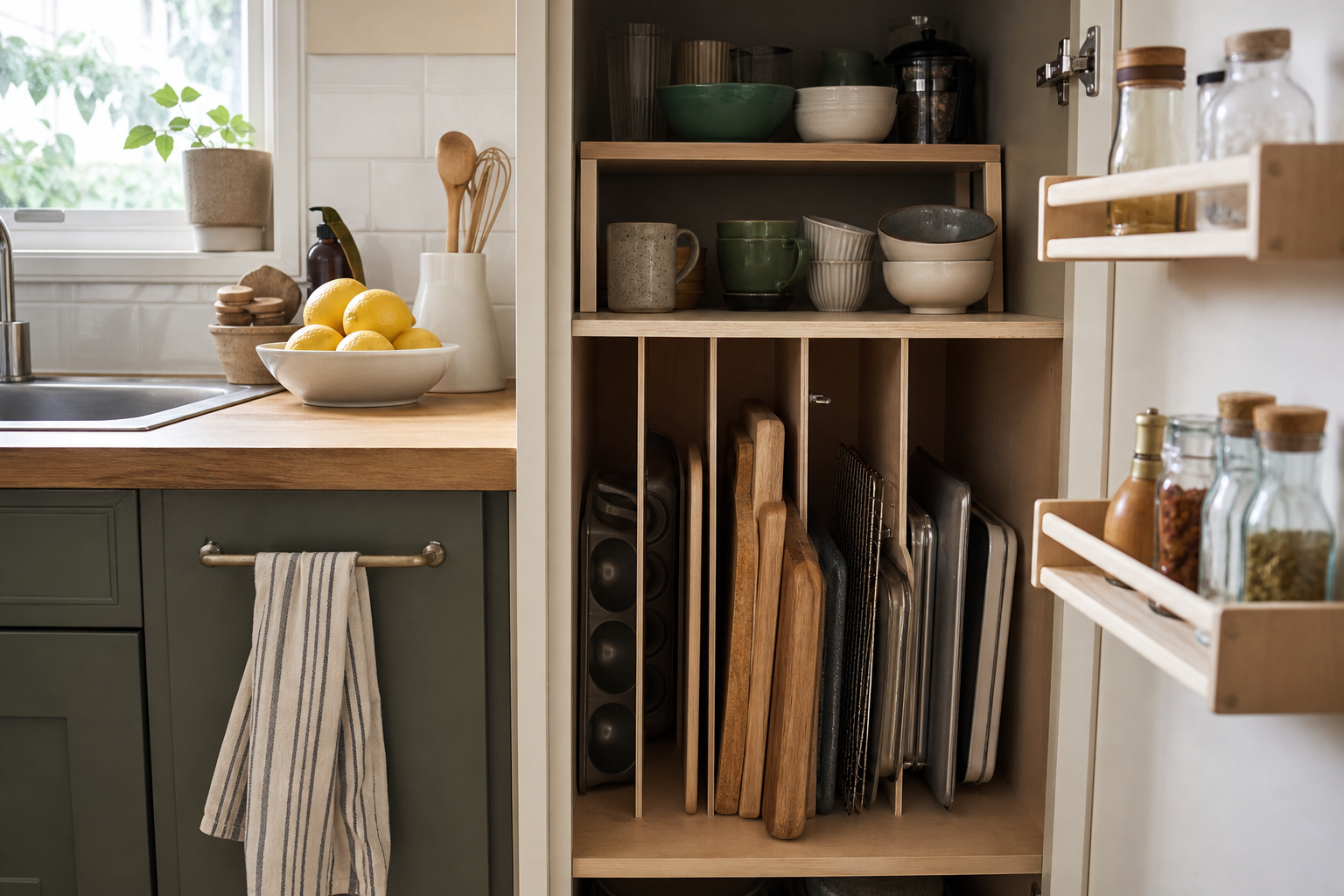
For a calmer look, store the less attractive essentials behind a cupboard door. A shallow drawer can hold coffee scoops, clips, tea bags and spare napkins. Small lidded boxes are helpful for keeping individual items together, but choose containers that fit the cupboard rather than buying them first and hoping they work.
Keep appliances compact and accessible
The main appliance will usually determine the shape of the station. Before committing to a coffee maker, consider whether it can stay out permanently, how it will be filled and where its cable will go. An appliance that has to be moved every time it is used may become irritating, while one that takes up the entire preparation area can make the rest of the kitchen harder to use.
Leave enough clearance to open lids, lift out removable parts and place a mug beneath the spout. If the appliance needs filling at the sink, make sure its water container can be removed without knocking into nearby objects. For a kettle, avoid pushing it so close to a wall or cupboard that steam repeatedly reaches the surface above it.
Cables deserve attention too. Keep them away from the sink and from the front edge of the worktop, where they can be pulled accidentally. A tidy cable route makes a small station look less crowded, but safety should come before a perfectly hidden wire. Follow the appliance instructions and keep electrical items away from splashes.
Make the station feel like part of the kitchen
A coffee station can be practical without looking like a separate installation. Repeat one or two materials already present in the room, such as wood, ceramic, glass or brushed metal. A wooden tray may soften a space filled with hard surfaces, while matching mugs can make a compact arrangement look deliberate.
Keep decorative additions restrained. One small plant, a useful canister or a framed print nearby may be enough, but avoid adding objects that reduce the working surface or need constant moving. In a small kitchen, the most attractive arrangement is often the one with a clear area around the equipment.
Colour can also help define the zone. A set of mugs in a contrasting shade gives the station a visual identity, while neutral storage keeps the overall effect quiet. If the kitchen already has several finishes, choose accessories that connect two of them rather than introducing another unrelated colour or material.
Plan for cleaning and daily resets
Coffee grounds, drips and loose packets are inevitable, so cleaning should be part of the setup. A washable tray or easily wiped surface can protect the worktop and make it simpler to clear away spills. Keep a small cloth nearby, but store it neatly rather than leaving it bunched beside the appliance.
Choose containers with lids that open easily and can be cleaned properly. Decanting coffee into a jar may look tidy, but it is only useful if the jar is suitable for the contents and can be kept dry. Wash mugs regularly and avoid allowing used spoons, empty sachets or used pods to collect around the machine.
At the end of the day, return the coffee and mugs to their usual places and remove anything that does not belong. If the station takes less than a minute to reset, it is more likely to stay organised. When space is particularly limited, put away the appliance after use and keep the tray as the visual anchor for the zone.
A small-kitchen coffee station works best when it reflects real habits. Give the most-used items a clear home, keep the preparation area safe and leave enough room for the rest of the kitchen to function. The result can be compact, attractive and genuinely useful without needing a dedicated coffee bar.