How to Create a Reading Nook Without a Spare Room
A reading nook does not need a dedicated room. Find an underused corner, add a comfortable seat, practical lighting and compact storage to create a calm place to read in even the smallest home.
Our guides prioritise practical, original advice. Product links may be affiliate links, but they should only appear when they add something useful.
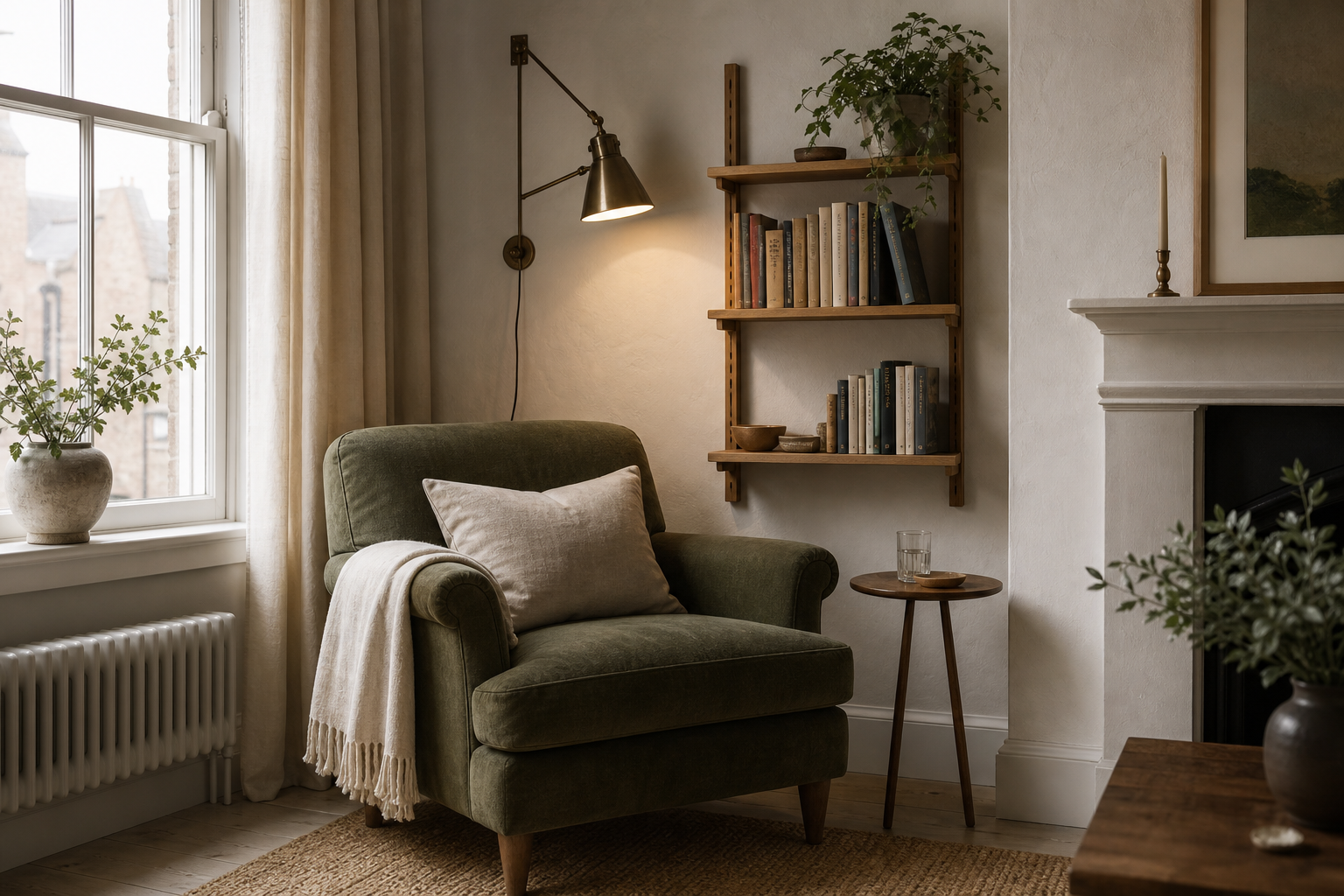
A reading nook can be as simple as a well-placed chair and a lamp, rather than a whole room set aside for books. In a small flat or compact house, the most successful approach is to make an existing area work harder without blocking walkways or making the room feel crowded.
Look for overlooked space beside a window, at the end of a bedroom, under a staircase or in a quiet corner of the sitting room. With the right proportions and a few considered details, even a narrow patch of floor can become a comfortable place to read, pause and switch off.
Start with a space that is already underused
Before buying furniture, observe how your home is used at different times of day. A corner that looks empty may be needed for opening a cupboard, pulling out a sofa bed or moving between rooms. Choose a spot that can take a seat without narrowing a route through the home.
Good options include:
- The end of a sofa, where a small chair can share existing floor space.
- A wide landing or bedroom corner that is not needed for storage.
- The space beside a bookcase, provided doors and drawers can still open fully.
- A bay window or alcove with enough depth for a chair or built-in bench.
- The corner of a home office that can serve as a reading area after work.
Natural light is helpful during the day, but avoid placing a chair where direct sun causes glare on the page or fades upholstery. If the only available corner is darker, good layered lighting will matter more than its position.
Choose a seat that suits the room
The seat is the centre of the nook, but it does not have to be a traditional armchair. A compact lounge chair, dining chair with a cushion, upholstered bench or sturdy window seat can all work. The best choice depends on the space around it as much as the seat itself.
Measure the available width and depth, then allow room to sit down and stand up comfortably. A chair that technically fits may still feel awkward if its arms touch nearby furniture or its back makes a cupboard difficult to reach. In a shared room, a lighter chair with a smaller visual footprint may be easier to live with than a deep, enveloping design.
For occasional reading, a firm chair with a supportive cushion may be enough. If you expect to spend longer periods there, look for a seat with proper back support and enough depth to change position. A footstool can improve comfort, but only include one if it can be tucked away or used as an extra surface when the nook is not occupied.
Use vertical storage instead of spreading out
Books and reading accessories can quickly make a small nook look untidy. Keep storage close at hand, but use the wall or the unused space beneath the seat rather than adding a large piece of furniture.
- Fit a narrow wall shelf above or beside the chair, positioned so it is easy to reach without leaning across the seat.
- Use a small bookcase with a slim depth if the wall allows one without obstructing the room.
- Choose a storage footstool for books, blankets or magazines that are not in current use.
- Place a basket beside the chair for a few soft items, but avoid letting it become a general-purpose dumping spot.
- Use a built-in bench with drawers in an alcove or beneath a window where the space is otherwise difficult to furnish.
Do not feel obliged to display an entire book collection. Keep current reads and a few favourites nearby, while storing the rest elsewhere. A smaller edit will make the nook feel purposeful and leave enough room for a lamp, drink or pair of glasses.
Plan reading light from two directions
Lighting often determines whether a reading nook is genuinely useful. Overhead lighting can illuminate the room but may cast shadows across the page. Add a dedicated reading light that directs light towards the book without shining into your eyes.
A floor lamp works well beside an armchair if its base does not create a trip hazard. A wall-mounted reading light saves floor space, particularly in an alcove or beside a bed, but check that it can be positioned at a suitable height. A table lamp is practical when there is already a side table, shelf or broad windowsill.
Choose a shade or adjustable fitting that controls glare, and keep cables routed close to the wall. In a busy walkway, a rechargeable lamp can avoid a trailing lead, provided it can be charged conveniently. The aim is to create a pool of light around the seat while keeping the rest of the room softly lit.
Make the nook feel separate without closing it off
A reading nook needs a little visual distinction, but dividing a small room with a bulky screen can make it feel tighter. Instead, use subtle changes in colour, texture or height to show that the corner has a different purpose.
A rug placed partly beneath the chair can define the area, as long as its edges lie flat and do not catch on doors or feet. A single painted wall, a panel of wallpaper or a different cushion fabric can give an alcove its own character. In a rented home, a removable textile or carefully chosen artwork may create the same effect without permanent changes.
Keep the palette connected to the rest of the room. Matching one colour from the nearby curtains, cushions or shelving will make the nook feel integrated rather than squeezed in. Avoid filling every surface with decorative objects; a calm arrangement is more conducive to reading and easier to keep clean.
Add comfort without adding clutter
Small details can make a reading corner inviting, but each item should earn its place. A cushion can improve support, while a washable throw is useful in a draughty corner. A small side table gives you somewhere for a mug or notebook, although a narrow shelf or stool may provide the same function with less visual weight.
Consider practical habits before finalising the layout. If you usually read with a drink, place a stable surface on your dominant side. If you wear glasses, leave room for a case. If the nook is shared with children or pets, choose durable fabrics and avoid fragile objects at the edge of a shelf.
Keep heat sources, candles and electrical cables safely away from textiles, and make sure the chair does not cover a radiator or obstruct ventilation. These details are easy to overlook when concentrating on appearance, but they affect how comfortably the nook works every day.
Make the arrangement flexible
The most useful small-space reading nooks can change function when necessary. A chair that can face the room may become an extra seat for guests. A storage bench can work as occasional seating, while a small side table can serve as a bedside table or laptop surface when the nook is not being used for reading.
If the area is part of a living room, avoid making it so specialised that it feels out of place. Select furniture that can be moved for cleaning or rearranged when the room is being used for entertaining. In a bedroom, keep enough clearance around the chair to preserve access to the bed, wardrobe and windows.
The finished nook does not need to look like a separate room. It simply needs to offer a comfortable seat, adequate light and a place for a few essentials. By adapting space you already have, you can create a reading retreat without giving up another room or overfilling the one you use.